.png)


Posted on
September 26, 2026
Elastomer Selection for Rail: EPDM vs Silicone vs FKM Under Fire, Temperature and Ageing Constraints
How fire performance, service temperature and long-term ageing should each pull elastomer selection between EPDM, silicone and FKM at different points on a rail vehicle.
Most rail sealing specifications default to EPDM, and for a large share of applications that default is correct. But three constraints, fire performance under EN 45545, service temperature range, and long-term ageing under UV, ozone and thermal cycling, push some applications toward silicone or FKM instead. Getting that decision wrong rarely shows up at commissioning, it shows up years later as premature seal failure, an unplanned overhaul, or a compliance finding during an in-service audit. This guide works through what EPDM, silicone and FKM are each actually good at, where the three constraints pull the decision in different directions, and how to approach elastomer selection location by location across a vehicle rather than defaulting to a single polymer for the whole build.
EPDM, silicone and FKM: what each elastomer is actually good at
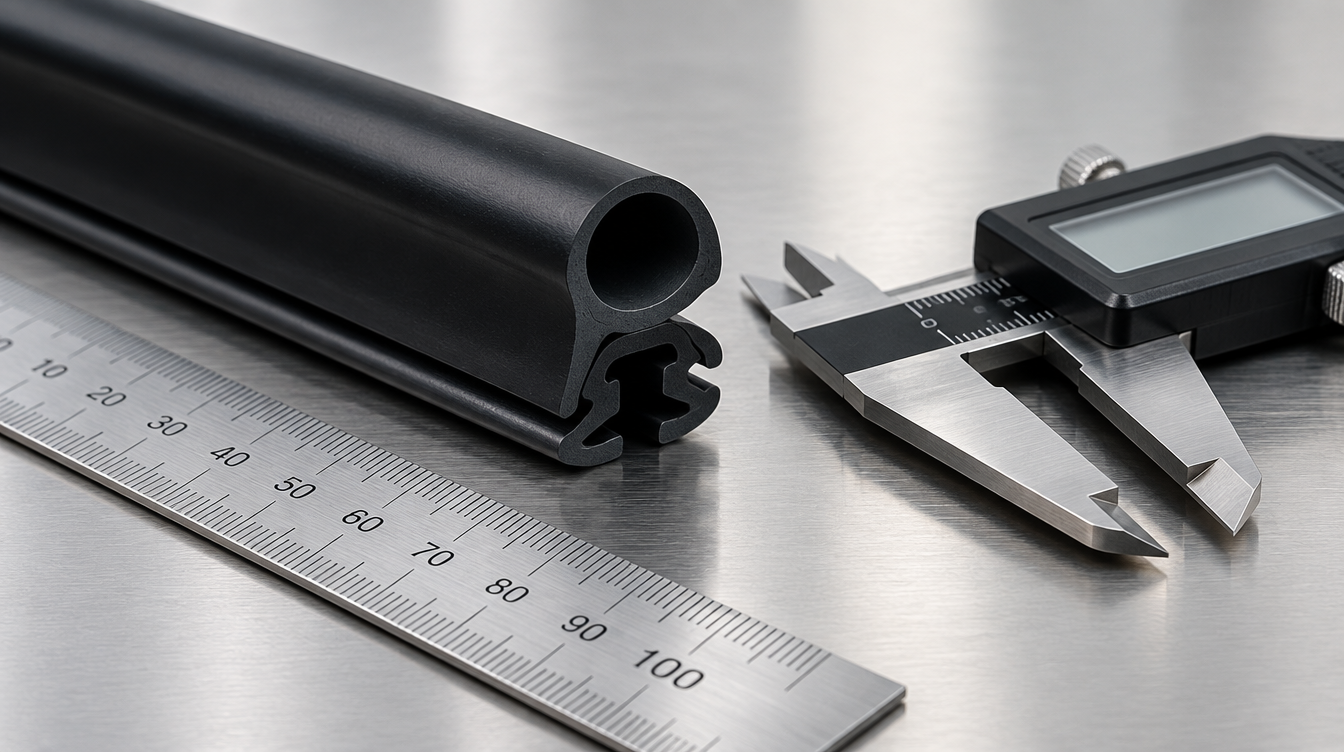
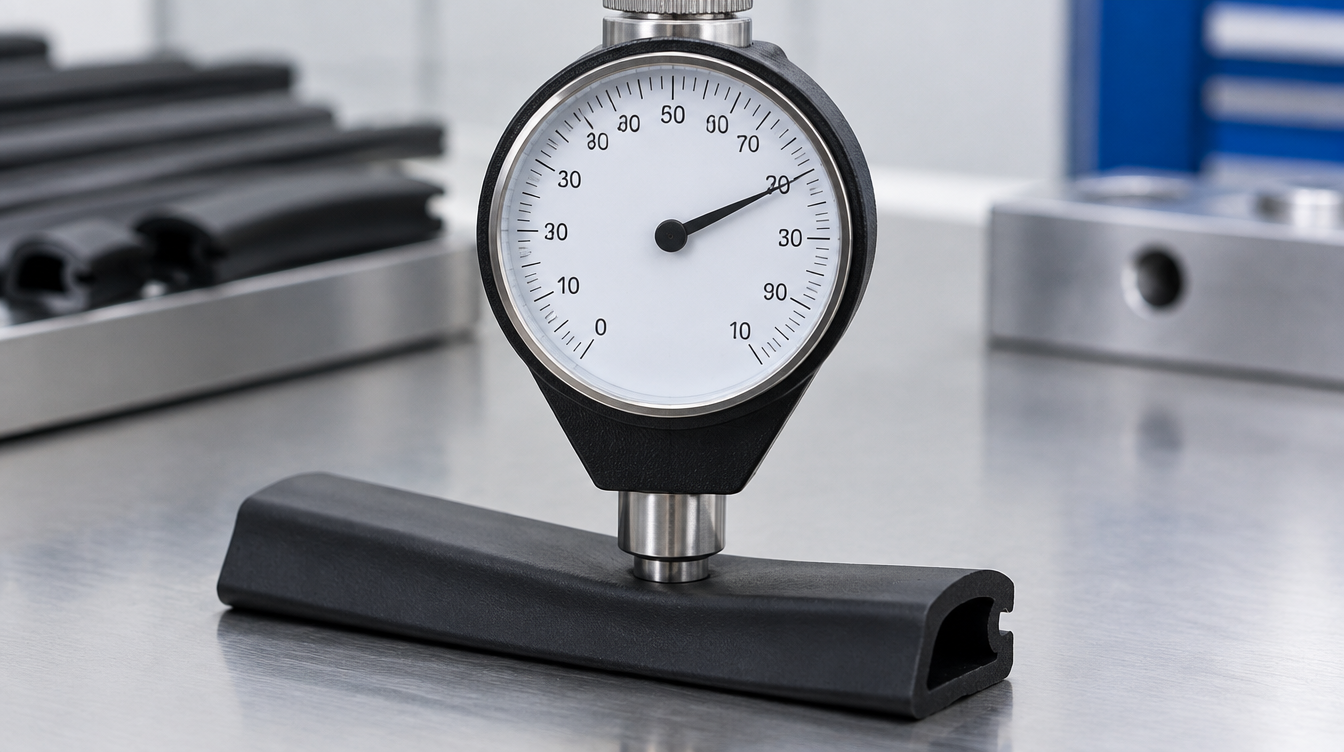
EPDM, ethylene propylene diene monomer, is the workhorse of rail sealing. It offers strong ozone and UV resistance, good general weathering, a wide usable temperature range for most interior and exterior applications, and it can be formulated to meet EN 45545-2 fire requirements with the right flame retardant package. Its main limitations are poor resistance to mineral oils, fuels and many hydrocarbon-based chemicals, which rules it out anywhere direct fluid exposure is likely. It is the default material behind the majority of door seals, window gaskets and general weatherproofing built as rubber extrusions, rubber cord and rubber profile. Our own EN 45545-2 HL3 qualified EPDM compound, EPDM70-0005, tests at 69 Shore A hardness against a 70 plus or minus 5 specification, 4.5 MPa tensile strength, 3.43 MPa modulus at 300% elongation and 550% elongation at break, with a five year shelf life and a service temperature range of minus 25 to 120 degrees Celsius.
Silicone offers the widest temperature range of the three elastomers by a meaningful margin, excellent smoke and toxicity behaviour due to its inorganic siloxane backbone, which is inherently favourable under EN 45545-2 smoke opacity and toxicity index testing, and very good UV and ozone resistance. Its trade-offs are comparatively lower tensile strength, poorer abrasion and tear resistance than EPDM or FKM, and materially higher cost. Silicone is widely used in silicone tubing and hoses, platinum-cured silicone tubes, and in extruded gasketing for high-hazard-level interior applications. Our HL3 qualified silicone compound, SL60-0010, tests at 60 Shore A hardness against a 60 plus or minus 5 specification, 7.1 MPa tensile strength, 450% elongation at break and 36 N/mm tear strength, with a shelf life of 10 to 20 years and a service temperature range of minus 55 to 200 degrees Celsius.
FKM, fluoroelastomer, commonly known by the trade name Viton, offers superior resistance to fuels, oils, hydraulic fluids and a wide range of aggressive chemicals, plus a high maximum service temperature, at a materially higher cost than EPDM. FKM is not automatically the easiest elastomer to qualify against EN 45545-2 smoke and toxicity criteria, depending on the specific fluorine content and formulation, so fire performance cannot be assumed for FKM the way it broadly can for silicone, it has to be validated compound by compound. FKM is the material behind our FKM (Viton) tubes product line, used wherever direct fluid contact is the dominant design constraint.
How fire, temperature and ageing interact in elastomer selection
The three constraints do not act independently, they interact, and the interaction is where most specification mistakes happen. Fire compliance under EN 45545-2 is achieved primarily through additive chemistry, flame retardant packages loaded into the base polymer, and the loading level needed to reach a given hazard level differs substantially by polymer. Silicone's inorganic backbone means it generally requires a lighter flame retardant loading to achieve favourable smoke and toxicity results than EPDM does, because the base polymer itself does not contribute as much combustible organic content. EPDM can absolutely reach HL3 hazard level performance, but it typically needs a heavier additive package to get there, and heavier flame retardant loading can measurably affect mechanical properties, compression set and ageing behaviour compared with a lightly loaded compound.
Temperature range interacts with fire performance because service temperature and flame retardant thermal stability are related, a compound qualified for a wide service temperature window needs an additive package that remains stable and effective across that entire range, not just at ambient test conditions. And ageing interacts with both, because a compound's flame retardant package, tensile properties and compression set can all shift over years of thermal cycling, UV exposure and ozone attack in ways that are not visible in a day-one fire test result. A compound that passes EN 45545-2 as moulded is not guaranteed to retain the same smoke and toxicity performance after years of in-service ageing unless that specific ageing behaviour has been characterised, which is a distinct question from initial fire compliance.
Compound variants and sealing formats built from each polymer
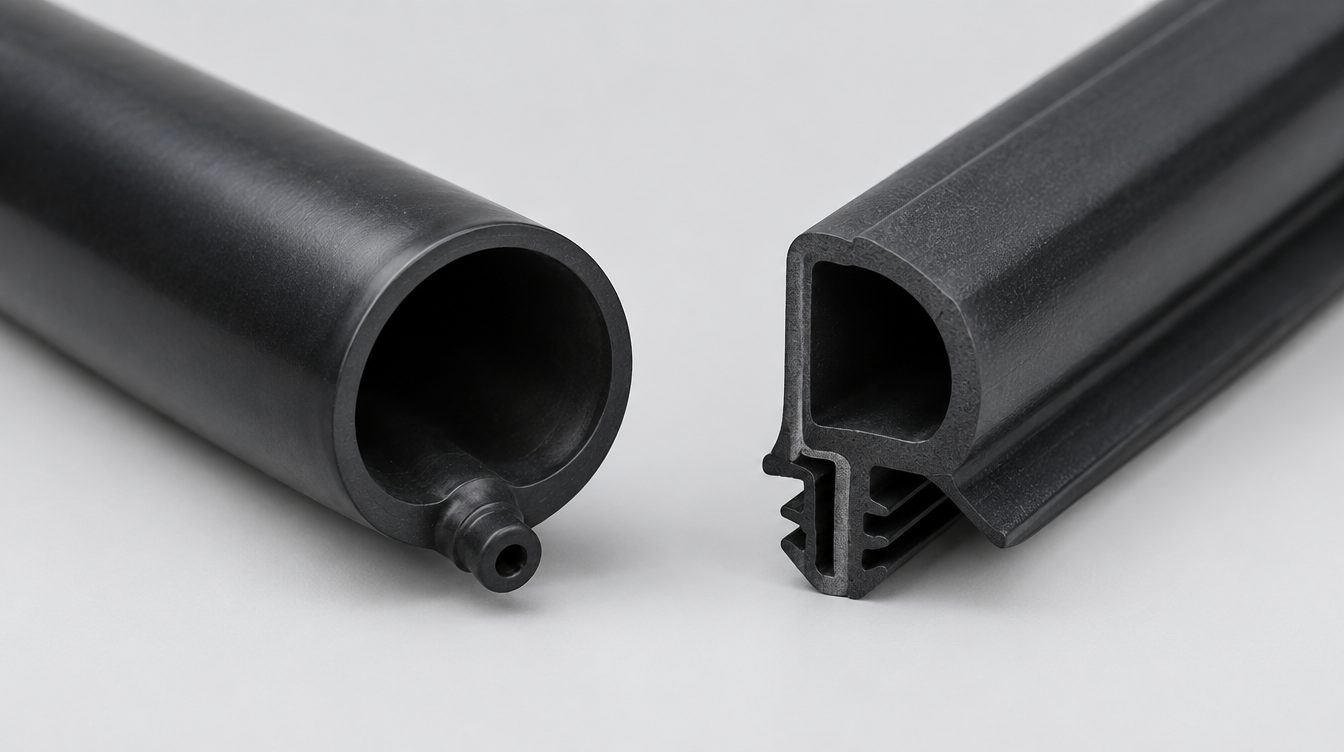
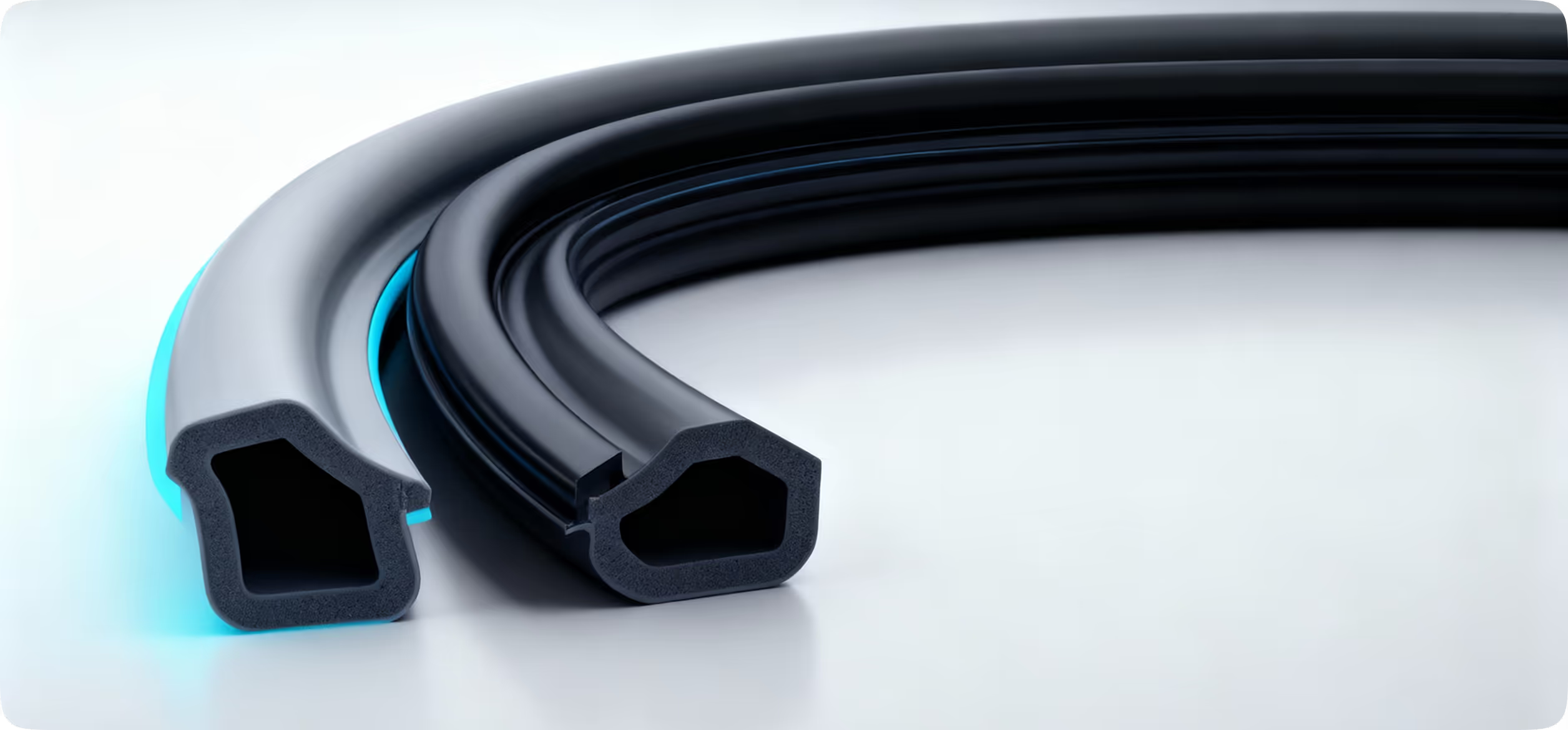
Each of the three base elastomers is converted into several different sealing geometries depending on the application, and the choice of format is often as consequential as the choice of polymer. EPDM is the base polymer behind most rubber extrusion profiles, including rubber strip, sponge extruded seals for compressible weatherproofing, and spliced and vulcanised seals for continuous-loop door and window frames. Silicone is most commonly supplied as silicone tubing and hose, including platinum-cured silicone tubes for cleaner, lower-outgassing applications and single-braid silicone hoses for pressure-carrying HVAC ducting runs. FKM is most often specified as FKM (Viton) tubes, moulded O-rings for fluid-line connections, and custom gaskets for fluid-carrying flange joints. A fourth family worth mentioning, thermoplastic elastomer such as TPE (Santoprene) tubes, can offer a lower-cost, recyclable alternative for lower-demand fluid-handling applications that do not require FKM-level chemical resistance or EN 45545 fire rating, though it is not typically a candidate for primary rail structural sealing.
Key properties and standards behind the specification
A rail elastomer specification typically anchors on a small set of measurable properties: Shore A durometer hardness, tensile strength and elongation at break, commonly tested to ASTM D412 or the equivalent ISO 37 method, compression set to ASTM D395 or ISO 815, and service temperature range, usually bounded by both a continuous maximum and an intermittent excursion limit. On top of these baseline mechanical properties, rail sealing carries the EN 45545-2 fire, smoke opacity and smoke toxicity requirements at the hazard level appropriate to the vehicle's operating and design category, as set by CEN-CENELEC, the standards body responsible for EN 45545. Exact temperature, tensile and ageing figures vary by specific compound formulation and should always be confirmed against the actual compound's own test data rather than generic polymer literature values, since additive packages, cure systems and filler loading all shift these numbers away from textbook ranges for the base polymer.
Where each elastomer actually gets specified on a vehicle
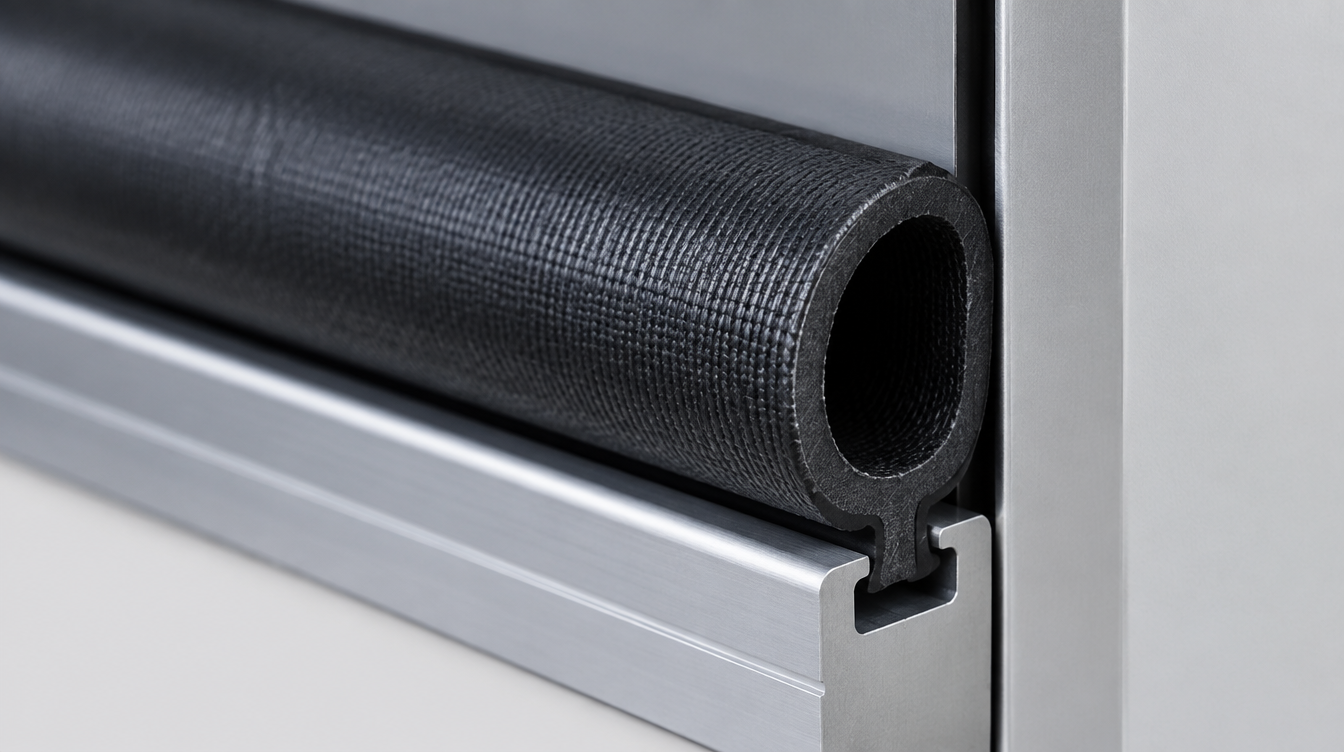
EPDM dominates door seals, window gaskets, body seals and most general weatherproofing, because it balances cost, fire compliance and weathering well for the majority of the vehicle envelope. This includes the bulk of inflatable seals used in pressure-sealed vestibule doors, where EPDM's combination of flex fatigue resistance and moderate cost makes it the default bladder material for most applications. Rubber diaphragms used in pneumatic actuation systems also frequently default to EPDM for the same reasons. Silicone tends to appear where extreme temperature range or the highest smoke and toxicity performance matters most, such as certain HVAC ducting seals routed near heating elements, or high-hazard-level interior applications like seat and panel gasketing in vehicles rated for the most demanding operating categories. FKM is reserved for locations with direct or splash exposure to fuel, hydraulic fluid or aggressive chemicals, such as traction system or underframe sealing near fluid-carrying components, fuel tank interfaces, and hydraulic brake system seals. These are comparatively small in total surface area across a vehicle but disproportionately important, because a seal failure at one of these locations carries safety and fluid-containment consequences well beyond a failed door seal.
EPDM vs silicone vs FKM compared
Relative service temperature range runs moderate to wide for EPDM, widest of the three for silicone, and wide with a high upper limit for FKM. Fuel, oil and hydrocarbon resistance is poor for EPDM, poor to moderate for silicone, and excellent for FKM. Ozone and UV resistance is excellent for both EPDM and silicone and good for FKM. Tensile, abrasion and tear strength is good for EPDM and FKM and comparatively lower for silicone. Smoke and toxicity profile under EN 45545-2 requires heavier flame retardant loading for EPDM, is inherently favourable for silicone given its inorganic backbone, and depends on fluorine content and formulation for FKM. Relative cost is lowest for EPDM, higher for silicone, and highest for FKM, and typical rail location runs door and window seals, body seals and inflatable seal bladders for EPDM, HVAC ducting and high-hazard-level interiors for silicone, and underframe or traction fluid-exposed sealing, O-rings and gaskets for FKM.
How to approach the selection decision
Start from the operating environment, not the elastomer name. Four questions should drive the decision at every part location: what is the realistic maximum and minimum service temperature the part will see, including seasonal and duty-cycle extremes, not just the average condition; is there any direct or splash fluid exposure, fuel, hydraulic fluid, oil, coolant, or aggressive cleaning chemicals; what EN 45545 hazard level does the vehicle's operating and design category require at that location; and what service life and inspection interval is expected before the part is due for replacement or re-inspection. Only once those four answers are established should the elastomer be mapped onto them, and even then, the specific compound's own tested data, not generic polymer behaviour, should confirm the choice. A seal specified purely by elastomer family name, without reference to the actual compound's tested temperature range, ageing data and fire test report, is an incomplete specification regardless of how correct the polymer family choice might be in principle.
Manufacturing and customisation across the three polymers
Manufacturing route interacts with elastomer choice in ways worth planning for early. EPDM extrudes readily into continuous profiles and splices and vulcanises cleanly into closed-loop door and window seals, which is why it dominates those geometries. Silicone processes well through both extrusion for tubing and hose and liquid injection moulding for more complex diaphragm and gasket geometries, but generally requires tighter cure control and, for platinum-cured grades, clean-room-adjacent process discipline to avoid catalyst poisoning during cure. FKM is typically compression or injection moulded rather than extruded into long continuous profiles, reflecting both its cost and its more common use in discrete geometries like O-rings and gaskets rather than continuous seals. Tooling lead time, minimum order quantity and cure cycle time all differ meaningfully across the three polymers, and a programme that needs a mix of EPDM, silicone and FKM components across a single vehicle should plan sourcing and qualification timelines accordingly.
Quality, testing and ageing validation
A seal that passes every specification on day one can still fail in year four if its ageing resistance under real duty conditions was not adequately characterised at qualification. This is where accelerated ageing test data, not just initial physical property data, actually predicts field performance, and it is a common gap in supplier datasheets that only show initial, unaged values. Ageing tests relevant to rail elastomers typically include heat ageing per the relevant ASTM or ISO method, accelerated exposure at elevated temperature for a defined duration followed by re-testing tensile, elongation and hardness, and ozone resistance testing, which exposes a stressed sample to a controlled ozone concentration to check for surface cracking. We have not yet completed formal accelerated ageing testing, heat ageing and ozone resistance specifically, on our rail-grade EPDM, silicone and FKM compounds beyond the initial physical property data shown above, and we say so directly rather than implying an ageing data set we do not yet hold. Programmes that need documented ageing performance as part of qualification should raise this with our engineering team so we can scope the testing against your timeline.
General elastomer test methods referenced throughout this comparison are set by ASTM International and the equivalent ISO methods, EN 45545 fire, smoke and toxicity requirements are maintained by CEN-CENELEC, and where a compound's substance chemistry also needs REACH screening, the European Chemicals Agency is the authoritative source for current restriction status.
Key takeaways
EPDM, silicone and FKM each solve a different combination of fire, temperature and fluid exposure constraints, and the right choice is made location by location against tested compound data, not by defaulting to a single polymer across the whole vehicle. Our EPDM70-0005 and SL60-0010 compounds give a concrete, tested starting point for that comparison rather than generic polymer literature ranges.
Send us your operating temperature range, fluid exposure profile and required EN 45545 hazard level, and our engineers will help map the right elastomer to each part location on your vehicle.
Need a custom sealing solution?
Talk to our engineers about inflatable seals, rubber diaphragms and custom extrusions built to your exact spec. We respond within one business day.
Frequently asked questions
Is silicone always better than EPDM for rail because of its wider temperature range?
Not necessarily. EPDM's lower cost and better mechanical strength make it the right choice for the majority of general sealing applications, silicone's advantages matter most at temperature extremes or where its smoke and toxicity profile is specifically needed.
Can EPDM meet EN 45545-2 HL3 requirements?
Yes, with a properly engineered flame retardant compound. Our EPDM70-0005 compound is qualified at HL3, though it typically requires more additive loading than silicone to reach the same smoke and toxicity performance, which needs to be balanced against mechanical properties for the specific application.
Has Western Sealtech ageing-tested its rail compounds?
Not yet beyond the initial physical property data shown for EPDM70-0005 and SL60-0010. Formal accelerated heat ageing and ozone resistance testing has not been completed, so talk to our team if your programme requires documented ageing data as part of qualification.

Need a quote?
For custom rubber sealing solutions contact us. We will respond to you within 1 business day


.avif)