.png)


Posted on
August 14, 2026
Fabric-Reinforced vs Non-Reinforced Inflatable Seals: A Material Guide
Compare fabric-reinforced and non-reinforced inflatable seals: pressure limits, cycle life, expansion behaviour and how to choose the right construction.
An inflatable seal only performs as well as the elastomer wall that carries the inflation pressure. When that wall is asked to expand, hold a load and repeat the cycle thousands of times, the single biggest decision an engineer makes is whether the seal is built with an internal fabric reinforcement or left as a solid, non-reinforced elastomer. This guide explains the difference in plain engineering terms so you can specify the right construction the first time.
How an inflatable seal actually works
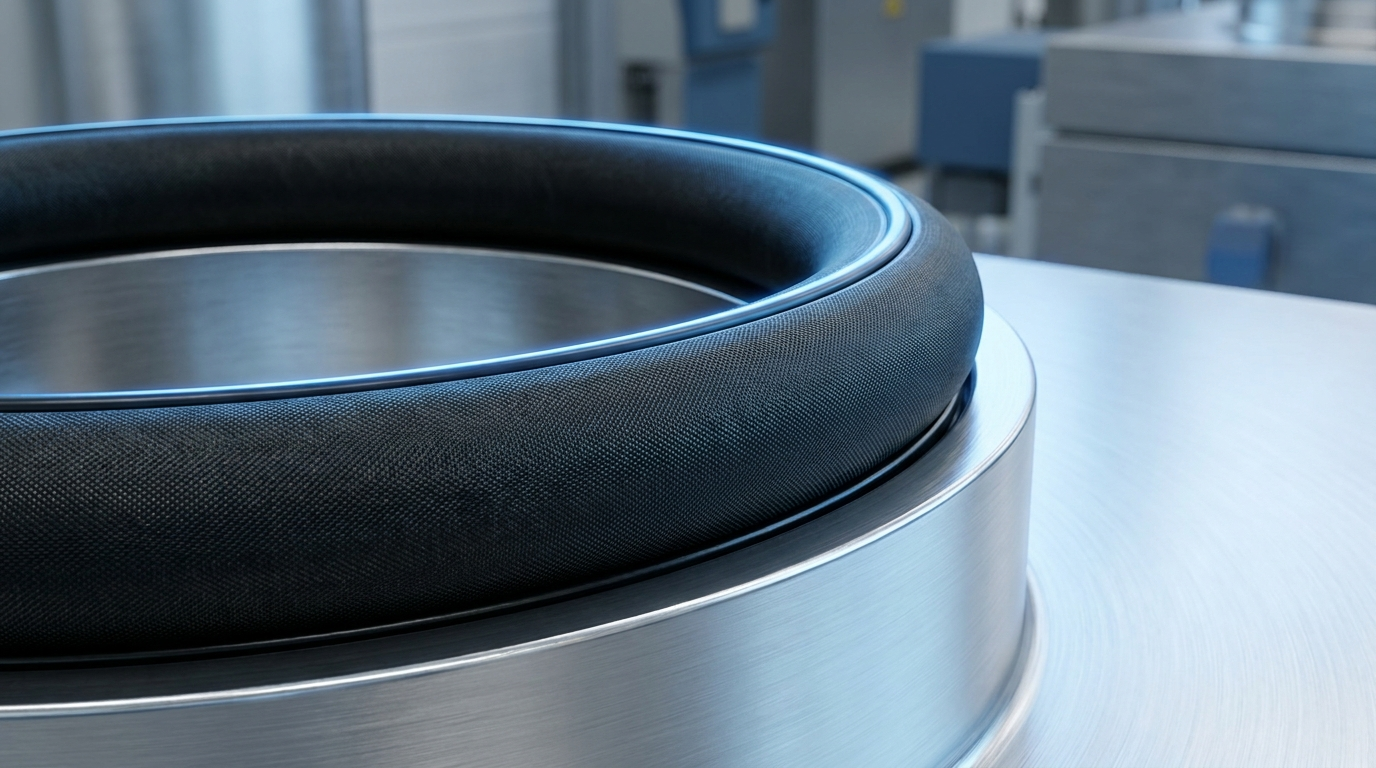
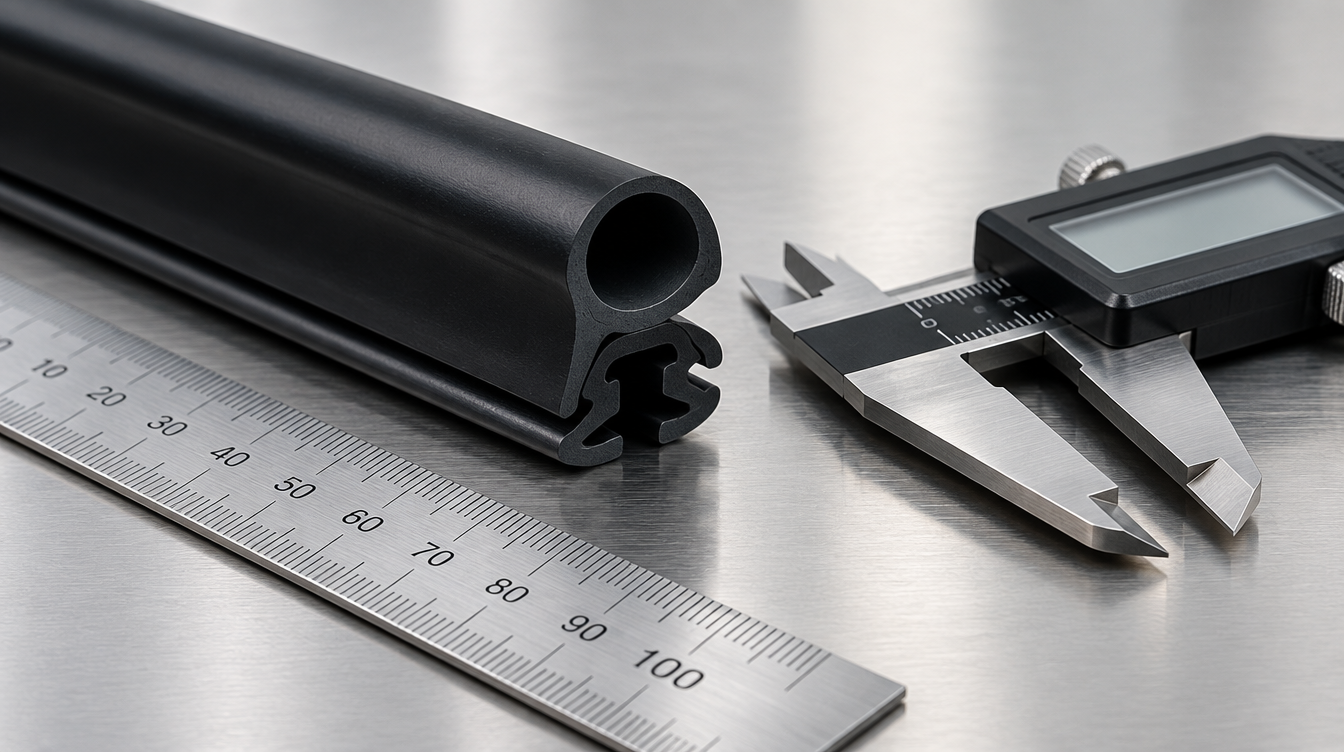
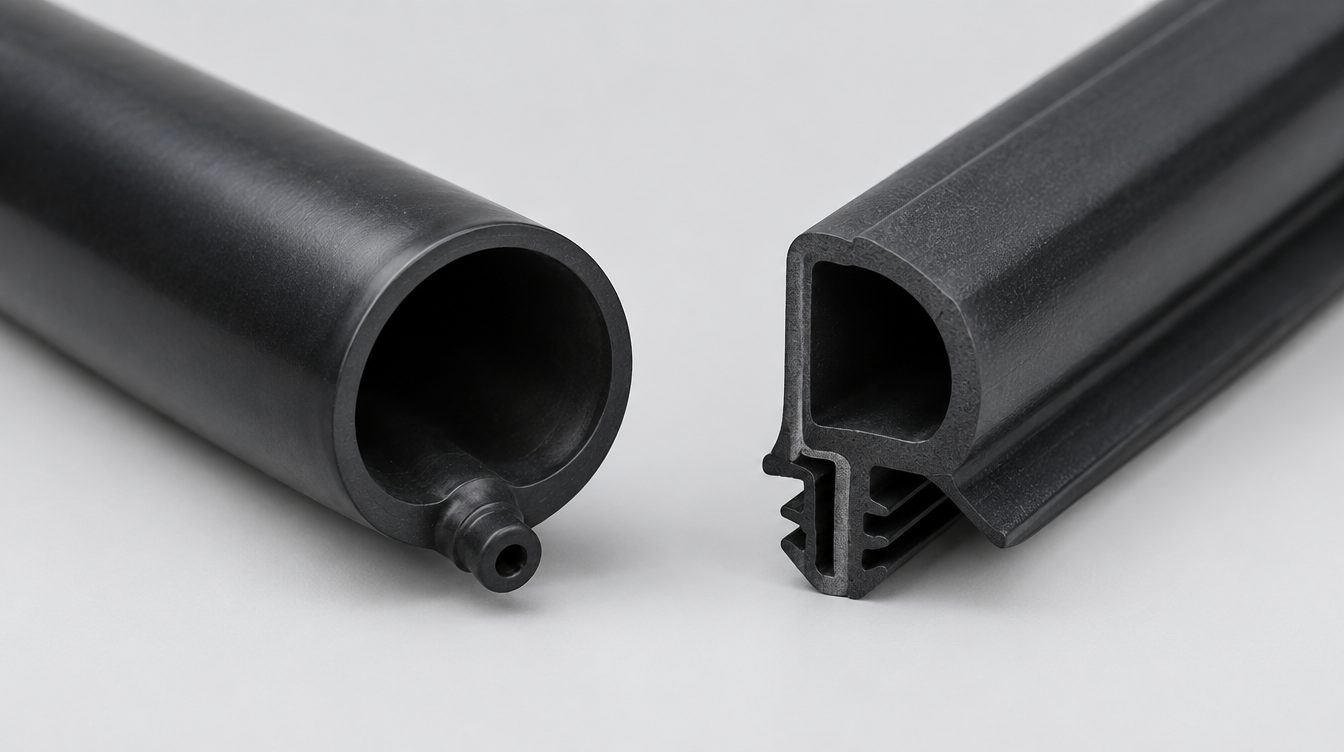
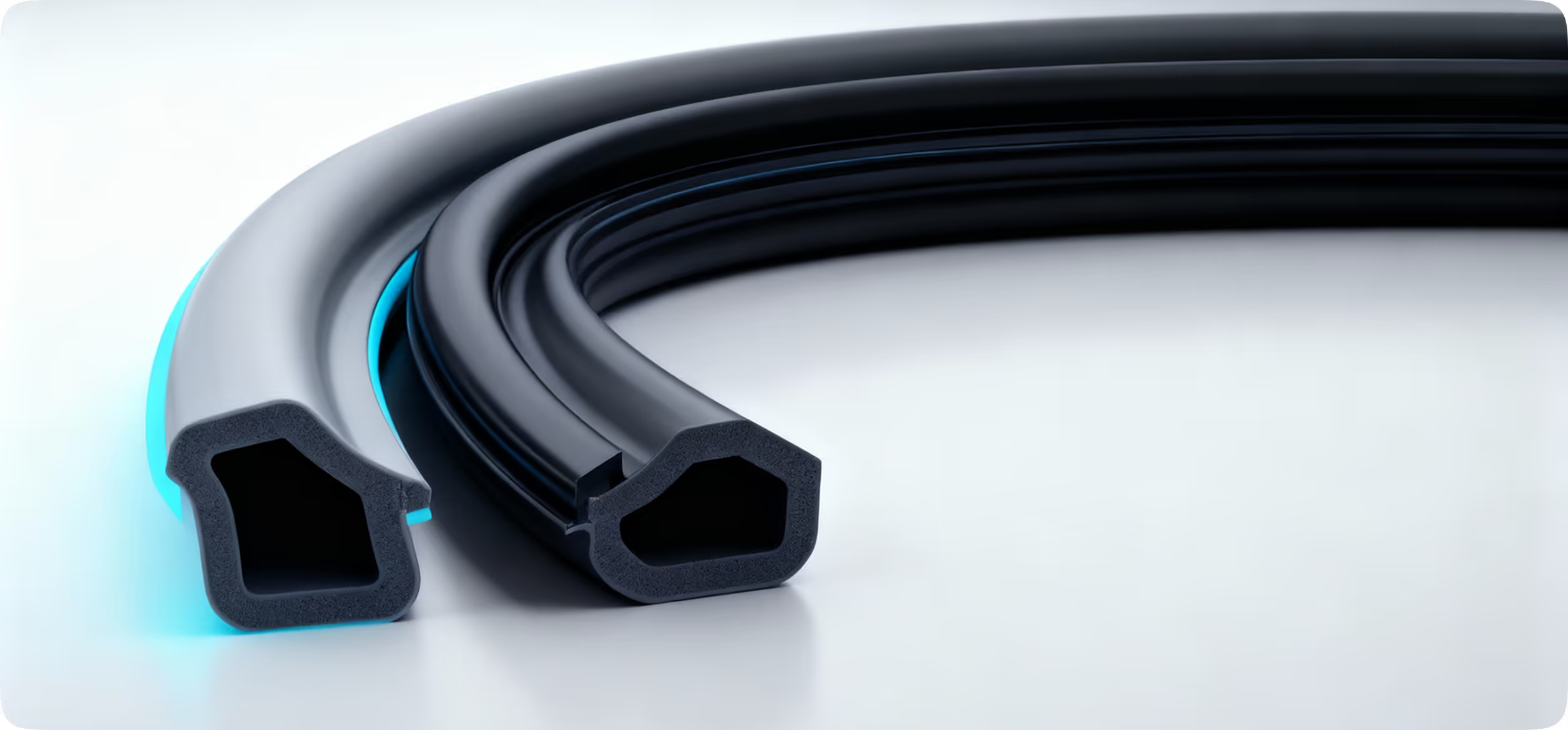
An inflatable seal is a hollow elastomer profile — dovetail, snap-in, ridged fasten-in or square slot-fit — that sits relaxed in its gland until compressed air or fluid is introduced. The profile then expands, typically by up to 100% of its profile height, to bridge the gap between two faces and create a uniform, leak-tight seal even on uneven or slightly misaligned surfaces. Because the seal engages only when pressurised, the mating hardware moves freely during opening and closing, and mechanical stress on the elastomer is limited to the moments it is actually sealing. Our inflatable seals operate across a 0.5 to 6 bar inflation range and a −60°C to +200°C service window, with a burst safety factor of at least three times working pressure.
Non-reinforced inflatable seals
A non-reinforced seal is a homogeneous elastomer wall — EPDM, silicone, nitrile or neoprene — with no fabric layer inside it. The whole wall stretches when inflated, which gives these seals two attractive properties: they expand generously for their size, and they conform beautifully to irregular or damaged sealing faces. For low-to-moderate pressures, large expansion gaps and applications where the seal must mould itself around imperfections, a non-reinforced construction is often the most economical and forgiving choice.
The trade-off is dimensional discipline. Because nothing restrains the elastomer, a non-reinforced seal will balloon in whichever direction offers least resistance. Under higher pressures or many thousands of cycles, that unrestrained stretch accelerates fatigue, can distort the sealing face away from where you want contact, and raises the risk of over-expansion if the gland is not tightly controlled.
Fabric-reinforced inflatable seals
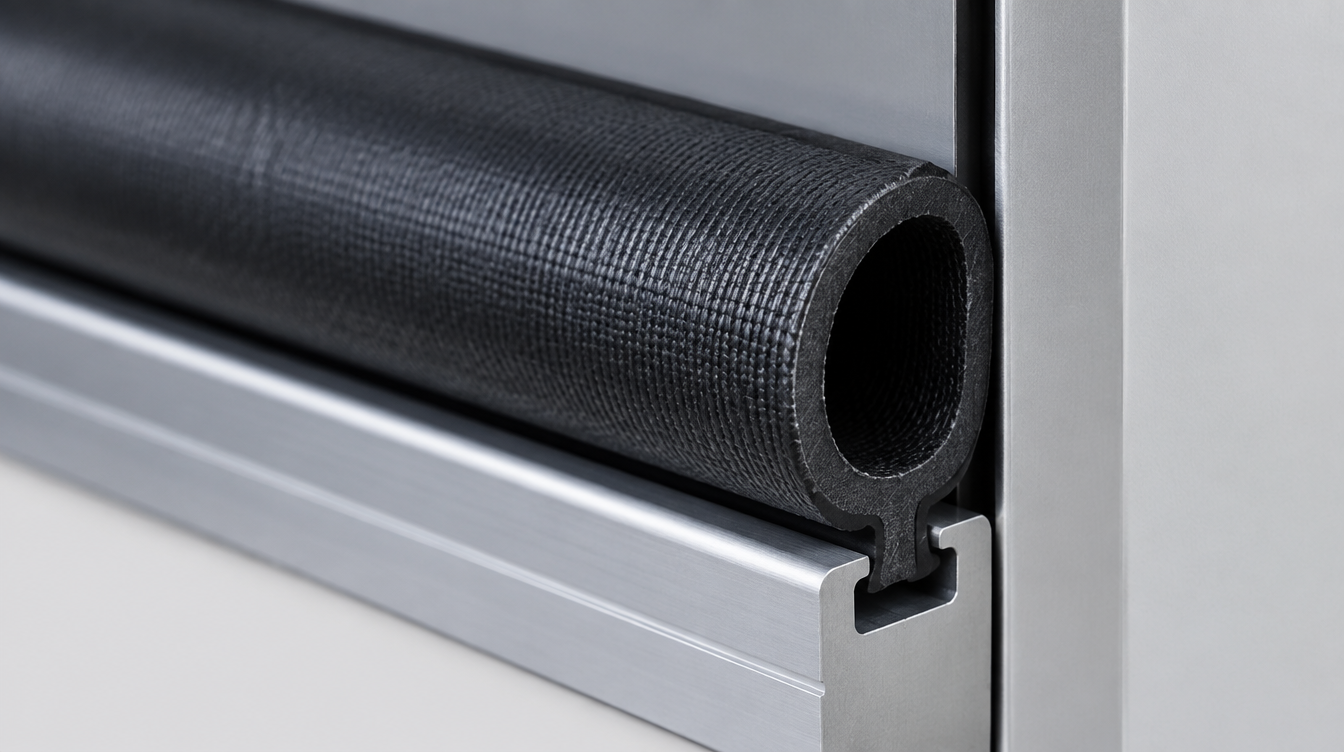
A fabric-reinforced seal carries a woven textile ply — nylon, polyester, Nomex® or Kevlar® — bonded into the elastomer wall, usually on the non-sealing faces. The fabric behaves like rebar in concrete: the elastomer still provides the seal and the elasticity, but the textile carries the tensile load. The practical consequences are significant.
Reinforcement fabric options and what they bring
The choice of reinforcement is not simply 'fabric or no fabric' — the textile itself is a specification decision. Nylon offers a strong, economical general-purpose reinforcement suited to standard industrial and cleanroom equipment. Polyester adds dimensional stability and good resistance to stretch, making it a dependable workhorse for repeatable contact geometry. Nomex® brings high-temperature and flame resistance for furnace-adjacent, autoclave and aerospace test duty. Kevlar® delivers exceptional tensile strength for the highest-pressure and most mechanically demanding seals. Matching the fabric to the dominant stress — heat, pressure or abrasion — is what turns a reinforced seal from 'generically stronger' into 'engineered for this duty'.
Choosing between the two
Reach for a non-reinforced seal when inflation pressure is modest, the gap to bridge is large, the sealing face is uneven, and cycle counts are low to moderate — think access panels, covers and intermittent-duty enclosures. Specify a fabric-reinforced seal when pressure is elevated, the duty is high-cycle, the equipment demands repeatable contact geometry, or when temperature and mechanical loads are severe. Semiconductor process chambers, pharmaceutical isolators, railway doors and industrial furnaces almost always justify reinforcement because the cost of an unplanned seal failure dwarfs the cost of the fabric ply.
A useful rule of thumb: if the seal has to expand a lot and forgive a rough face, lean non-reinforced; if it has to hold pressure precisely and survive endless cycles, lean reinforced. Where an application sits on the boundary, the decision usually comes down to validated cycle-life data rather than catalogue figures — which is where testing matters.
Cost, lead time and total cost of ownership
A non-reinforced seal is usually cheaper to produce and can be the right commercial choice for low-duty applications. But the purchase price is only part of the picture. In a mission-critical door, chamber or process, the cost of an unplanned seal failure — lost production, scrapped batches, downtime, and in regulated sectors a compliance event — dwarfs the marginal cost of reinforcement. When you weigh total cost of ownership across the service life, the reinforced seal frequently wins even where its unit price is higher. The right question is not 'which is cheaper to buy' but 'which is cheaper to own over the number of cycles this seal will actually see'.
We have seen this play out in practice. In one pharmaceutical application, switching a chronically failing door seal to a fabric-reinforced construction transformed both the leak performance and the replacement interval — the case study is worth reading alongside this guide if you are weighing the same decision.
Validation is where the choice is proven
Whichever construction you specify, insist on evidence. Every one of our inflatable seals is subjected to 100% pressure leak testing, cycle validation and burst-pressure verification before it ships, so the reinforcement decision is backed by measured performance rather than assumption. Reinforcement is not automatically 'better' — it is the right answer for a defined set of pressures, cycles and temperatures, and the wrong answer when generous expansion over an irregular face is what the application actually needs. Ask for the data, specify against it, and the seal will do what the drawing says it will.
Key takeaways
Not sure which construction your gland calls for? Share your pressure, cycle and temperature targets with our engineering team and we will recommend — and validate — the right inflatable seal for the job.
Kevlar® and Nomex® are registered trademarks of Arclin. All trademarks are the property of their respective owners and are used here for identification purposes only.
Need a custom sealing solution?
Talk to our engineers about inflatable seals, rubber diaphragms and custom extrusions built to your exact spec. We respond within one business day.
Frequently asked questions
Can a fabric-reinforced seal still conform to an uneven sealing face?
To a degree, yes — the sealing face itself remains elastomer and will accommodate minor irregularity. But the reinforcement deliberately limits how far the wall can stretch, so where the face is genuinely rough or the gap varies significantly, a non-reinforced construction conforms better.
Does reinforcement change the maximum inflation pressure?
It extends the usable working range rather than changing the published limit. Our inflatable seals operate across 0.5 to 6 bar with a burst safety factor of at least three times working pressure; reinforcement is what allows a seal to sit reliably at the upper end of that range across many thousands of cycles.
How do I know which reinforcement fabric to specify?
Start from the dominant stress. Sustained high temperature points to Nomex®; peak tensile load points to Kevlar®; dimensional repeatability points to polyester; general industrial duty is well served by nylon. If two stresses compete, send us the duty profile and we will recommend against tested data.

Need a quote?
For custom rubber sealing solutions contact us. We will respond to you within 1 business day


.avif)