.png)


Posted on
August 14, 2026
Nuclear-Grade Sealing Systems: Doors, Hatches & Containment
How nuclear-grade seals are engineered for radiation resistance, containment integrity and long service life on doors, hatches and containment boundaries.
Few sealing applications are as unforgiving as nuclear. A containment seal must resist radiation that degrades ordinary elastomers, hold its integrity across decades of service, and perform without fail because the consequence of failure is not downtime but a breach of containment. Engineering seals for this environment demands specialised materials, conservative design and rigorous validation. This article explains what sets nuclear-grade sealing apart.
What makes nuclear sealing uniquely demanding
Elastomers in a nuclear environment face a combination of stresses rarely seen together elsewhere: ionising radiation that breaks or cross-links polymer chains over time, elevated temperatures, potential chemical exposure from decontamination agents, and service-life expectations measured in decades rather than years. On top of that sits the overriding requirement of containment integrity — the seal is part of the barrier that keeps radioactive material where it belongs. That combination means a seal cannot simply be 'good enough'; it must be demonstrably qualified for the conditions and the lifetime.
Radiation and material degradation
Ionising radiation ages elastomers by altering their molecular structure. Some polymers predominantly cross-link and harden, becoming brittle and losing the elasticity a seal depends on; others predominantly chain-scission and soften, losing the mechanical strength to hold contact force. Either change compromises sealing, and both are cumulative functions of absorbed dose rather than of time in service.
Radiation resistance is therefore a primary material selection criterion, not a secondary one. Certain elastomer families and specifically formulated compounds tolerate accumulated dose considerably better than standard grades, retaining elasticity and compression recovery under exposure. Our EPDM, silicone and FKM materials are engineered and tested for prolonged ionising radiation environments.
It is worth being precise about what that does and does not mean. No elastomer is proof against radiation — every organic polymer degrades under sufficient dose, and the engineering question is always whether a given compound retains adequate properties over the accumulated dose its service life will impose. Selecting and qualifying the compound against the expected dose, temperature and chemical exposure is the foundation of a nuclear seal, and any supplier who describes a material as immune to radiation is describing something that does not exist.
Containment integrity and design conservatism
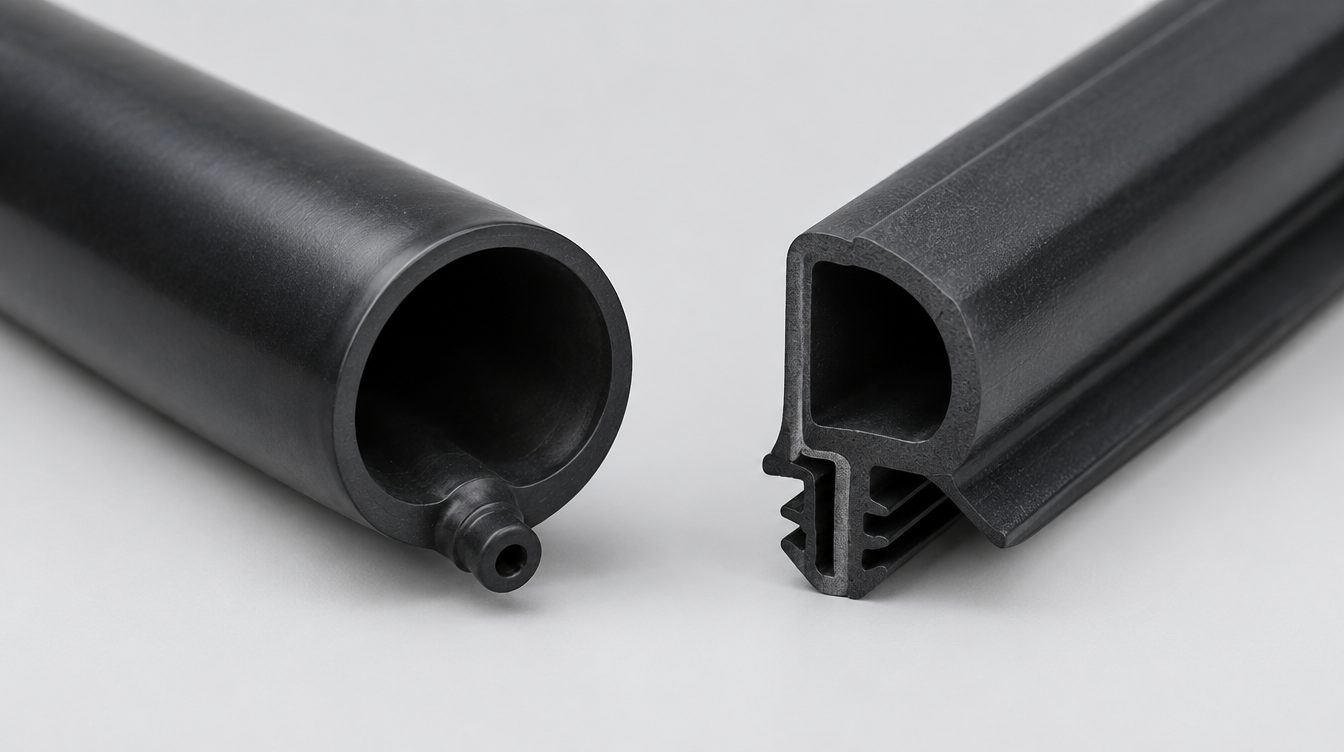
Nuclear sealing design is deliberately conservative. Seals on containment doors, hatches, penetrations and equipment must maintain a leak-tight boundary under normal operation and, where required, under abnormal conditions. This drives generous safety margins, redundancy where appropriate, and a preference for designs whose behaviour is predictable and testable. Inflatable seals can be attractive here because they engage only on demand and can be pressure-tested and monitored in service, providing a verifiable indication that the seal is performing — a valuable attribute where confirmation of integrity matters as much as the seal itself.
Doors, hatches and containment boundaries
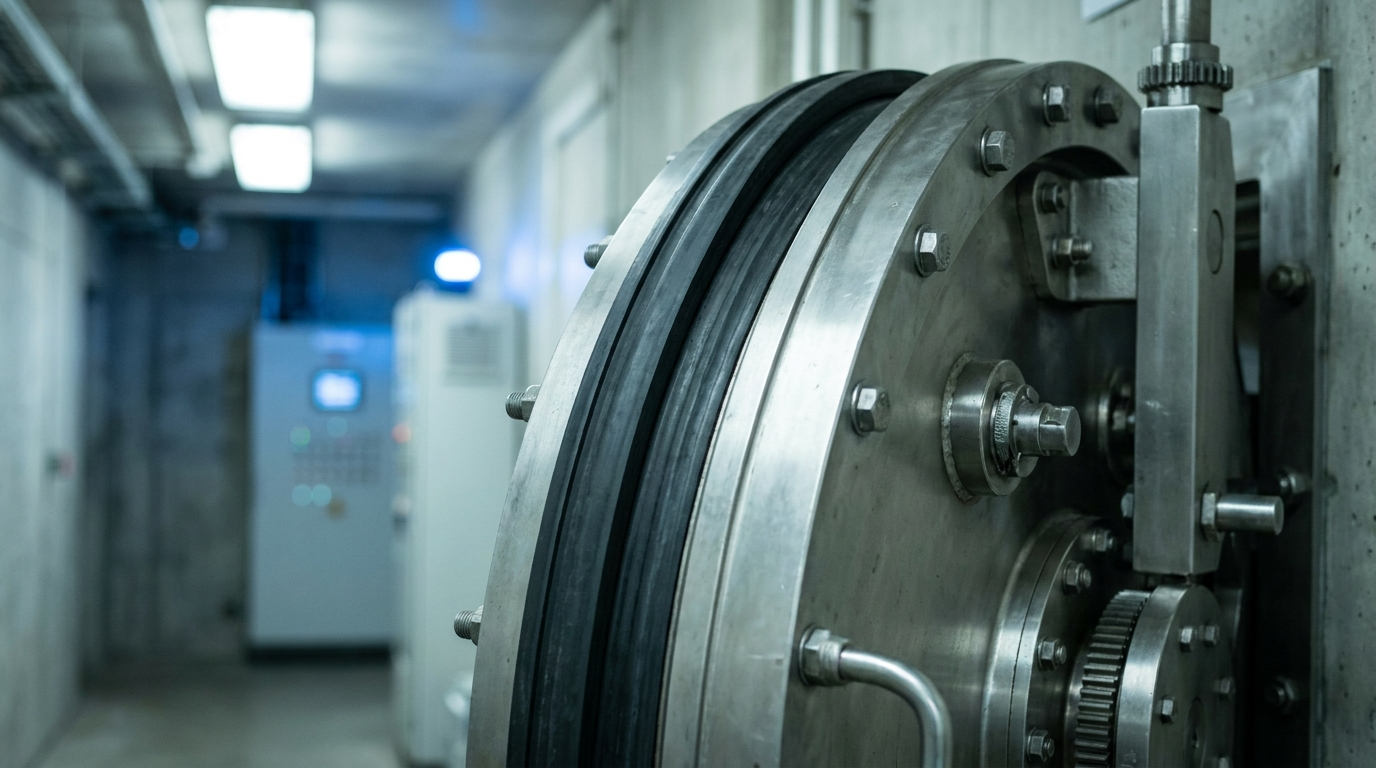
The seals that matter most in a nuclear facility are those on the boundaries people and equipment cross: personnel and equipment airlock doors, containment hatches, fuel-handling penetrations, glove-box and containment-cell interfaces, and the many access points that must be openable yet perfectly sealed when closed. Each has its own geometry and duty cycle, so seals are frequently custom-engineered — moulded to a specific boundary geometry, or extruded and spliced into a bespoke framed seal — rather than drawn from a catalogue. The design must reconcile the need for repeated opening with the demand for absolute closure.
Qualification, testing and the evidence trail
In the nuclear sector a seal is only as good as its qualification evidence. Materials and designs are qualified by demonstrating performance against the specified environmental conditions — accumulated radiation dose, temperature, and where relevant chemical exposure and thermal ageing — so that behaviour over the intended life is proven rather than assumed. Because replacing a seal in a nuclear environment can be difficult, costly and dose-incurring, long qualified service life is a core objective in its own right, and that places a premium on low compression set: the seal must keep pushing back against its faces years after installation.
This makes validated testing and thorough documentation integral to the deliverable rather than an optional add-on. A nuclear seal is specified, produced and accepted on the strength of its qualification record, and a supplier serving this sector must be able to support that evidence trail — which compound, tested to what dose, at what temperature, in what section, against which reference. A seal for this sector is specified around its proven lifetime under dose, not just its as-new properties.
Maintenance, replacement and the value of monitoring
The cost and dose associated with replacing a containment seal reshapes the whole design philosophy toward long qualified life and verifiable integrity. Low compression set keeps a seal effective for years without intervention. Inflatable designs, which can be pressure-tested and monitored in service, allow integrity to be confirmed without disassembly — a significant advantage where every access event carries cost and dose. Designing for confirmable performance and extended replacement intervals is not merely convenient; in this sector it directly reduces operational risk and exposure.
Why custom engineering is the norm
Nuclear sealing is rarely an off-the-shelf purchase. The combination of bespoke boundary geometries, radiation-resistant compounds, conservative safety margins and qualification requirements means most nuclear seals are engineered for the specific application. That is where a manufacturer with in-house compound formulation, custom moulding and extrusion, and the ability to design and validate to a demanding specification becomes essential. The value is not a part number but an engineered, qualified solution matched to the containment it protects.
Sealing for the nuclear sector is engineering at its most conservative and consequential: radiation-resistant materials, containment-grade design margins, verifiable integrity and decades of qualified life. It rewards specialised material knowledge and disciplined validation — and leaves no room for assumptions, least of all about what a material will still be doing after twenty years under dose.
Key takeaways
Engineering seals for containment doors, hatches or penetrations? Talk to our team about radiation-resistant compounds and custom-engineered, validated sealing systems for your nuclear application.
Need a custom sealing solution?
Talk to our engineers about inflatable seals, rubber diaphragms and custom extrusions built to your exact spec. We respond within one business day.
Frequently asked questions
Is any elastomer genuinely radiation-proof?
No. Every organic polymer degrades under sufficient accumulated dose. The meaningful question is whether a compound retains adequate elasticity, strength and compression recovery over the total dose its service life will impose — which is a qualification question, answered with test data, not a material property you can claim in the abstract.
Why are inflatable seals often specified for containment boundaries?
Because they engage only on demand and can be pressure-tested and monitored in service. That allows integrity to be confirmed without disassembly, which matters a great deal where every access event carries both cost and dose.
What should I ask a supplier for when qualifying a nuclear seal?
The compound identity, the accumulated dose it has been tested to, the temperature and any chemical exposure in the test conditions, the section or thickness tested, and the reference standard used. Evidence that is specific to those parameters is what an approval process will accept.

Need a quote?
For custom rubber sealing solutions contact us. We will respond to you within 1 business day


.avif)