.png)


Posted on
August 14, 2026
Pharmaceutical & Food-Grade Sealing Solutions: A Compliance Guide
Specifying seals for pharma and food processing: FDA and EU compliance, platinum-cured silicone, hygienic design and the 2026 USP Class VI transition.
In pharmaceutical and food processing, a seal is not just a component that keeps things in or out — it is a potential contamination source, a regulated material, and an audited part of the process. Specifying seals for these environments means thinking about purity, biocompatibility, cleanability and documentation as much as about pressure and temperature. This guide sets out what makes a sealing solution genuinely food- and pharma-grade.
Why sealing is different in regulated hygiene environments
A seal in a bioreactor, a filling line, an isolator or a food-processing skid is in direct or indirect contact with product that people ingest or that must remain sterile. If the seal leaches extractables, harbours microbes in a crevice, degrades and sheds particles, or cannot be cleaned in place, it compromises the product and the process. The consequences are not merely technical — they are regulatory. That is why material certification, hygienic design and traceability sit at the centre of seal specification for these industries.
The materials that qualify
Only a limited set of elastomers meet the purity and compliance bar for food and pharmaceutical contact:
The common thread is certification. A material that merely looks clean is not enough; food and pharmaceutical applications require documented compliance against the framework that applies in your market, supported by formulation and migration or extractables data.
Understanding the standards — and getting the language right
This is where seal specifications most often go wrong, so it is worth being precise about three separate frameworks.
United States, food contact. Compliance is against the applicable provision of 21 CFR. For seals, gaskets and O-rings the relevant citation is normally 21 CFR 177.2600, 'Rubber articles intended for repeated use', which lists the permitted elastomers, curatives, antioxidants, plasticisers and fillers and imposes extraction limits in both aqueous and fatty food simulants. Where the part is a container closure gasket, 21 CFR 177.1210 applies instead. One point of language matters more than it appears: the FDA does not approve materials. Approval applies to drugs, certain devices and food additives that undergo premarket review. A compound can only be described as *compliant with* the applicable provision — 'FDA approved rubber' is a claim your customer's quality department will challenge, and rightly.
United States, pharmaceutical and medical. Elastomers have traditionally been qualified to USP Class VI, the highest biological reactivity classification under USP General Chapter <88>, involving tests for systemic toxicity, intracutaneous irritation and implantation response. This is changing. Revisions to USP <87> and <88> effective 1 December 2026 delete the Classification of Plastics table entirely, removing the Class I–VI designations, and limit in vivo testing to systemic injection where the in vitro cytotoxicity requirements of <87> are not met. Biocompatibility is increasingly assessed under ISO 10993, on a risk basis reflecting intended use, contact duration and patient exposure. If you are qualifying a new system, ISO 10993 is the framework to specify against; if your existing documentation calls for Class VI, legacy data remains available.
European Union, food contact. The framework is Regulation (EC) No 1935/2004, supported by the good manufacturing practice requirements of Regulation (EC) No 2023/2006. A common and conspicuous error is to cite Regulation (EU) No 10/2011 for a rubber seal — that measure applies to plastics, not elastomers. In fact there is no EU-wide specific measure for rubber at all, so under Article 6 of the framework regulation, national provisions apply. In practice the recognised benchmark is Germany's BfR Recommendation XXI, 'Commodities based on natural and synthetic rubber', alongside Council of Europe Resolution ResAP(2004)4. Compliance is demonstrated through formulation control and overall and specific migration testing.
The practical rule across all three: establish exactly which framework and which provisions your quality and regulatory teams require *before* selecting a compound, because the certification drives the material choice — not the other way round.
Hygienic design matters as much as material
A certified compound in a poorly designed seal still fails a hygiene audit. Hygienic sealing design minimises crevices where product or microbes can lodge, avoids dead legs and entrapment areas, ensures the seal sits flush without gaps that harbour residue, and supports clean-in-place and sterilise-in-place regimes without degrading. Compression set is critical here too — a seal that takes a permanent set opens a gap that becomes a contamination trap. Designing the gland and seal together for cleanability is what turns a compliant material into a compliant sealing solution.
Clean-in-place and sterilise-in-place compatibility
Seals in pharmaceutical and food systems are rarely removed for cleaning — they are cleaned in place. That makes CIP and SIP compatibility a core specification requirement. The seal material must withstand repeated exposure to hot caustic and acidic cleaning solutions and, for SIP, to high-temperature steam, cycle after cycle, without swelling, cracking or losing recovery. This is where material choice and process reality meet: a compound that is chemically inert to product but degrades under the plant's cleaning regime will fail prematurely. Specify the seal against the actual cleaning and sterilisation chemistry and temperature it will face, not just the process fluid.
This is also the single most common failure mode we are asked to investigate in pharmaceutical equipment — seals that pass qualification comfortably and then degrade over repeated autoclave and SIP cycles. We have written separately on why that happens and how to design it out.
Single-use and process-specific considerations
Modern bioprocessing increasingly uses single-use and gamma-irradiated components, which places additional demands on elastomers — resistance to sterilising radiation without embrittlement, and validated extractables and leachables performance for the specific process. Whether a seal is single-use or a long-life component, the discipline is the same: define the sterilisation method, the contact duration and the regulatory evidence required, then select and document a material qualified for that exact combination. Generic 'pharma-grade' is a starting point, not a specification.
Forms of pharma and food-grade seals
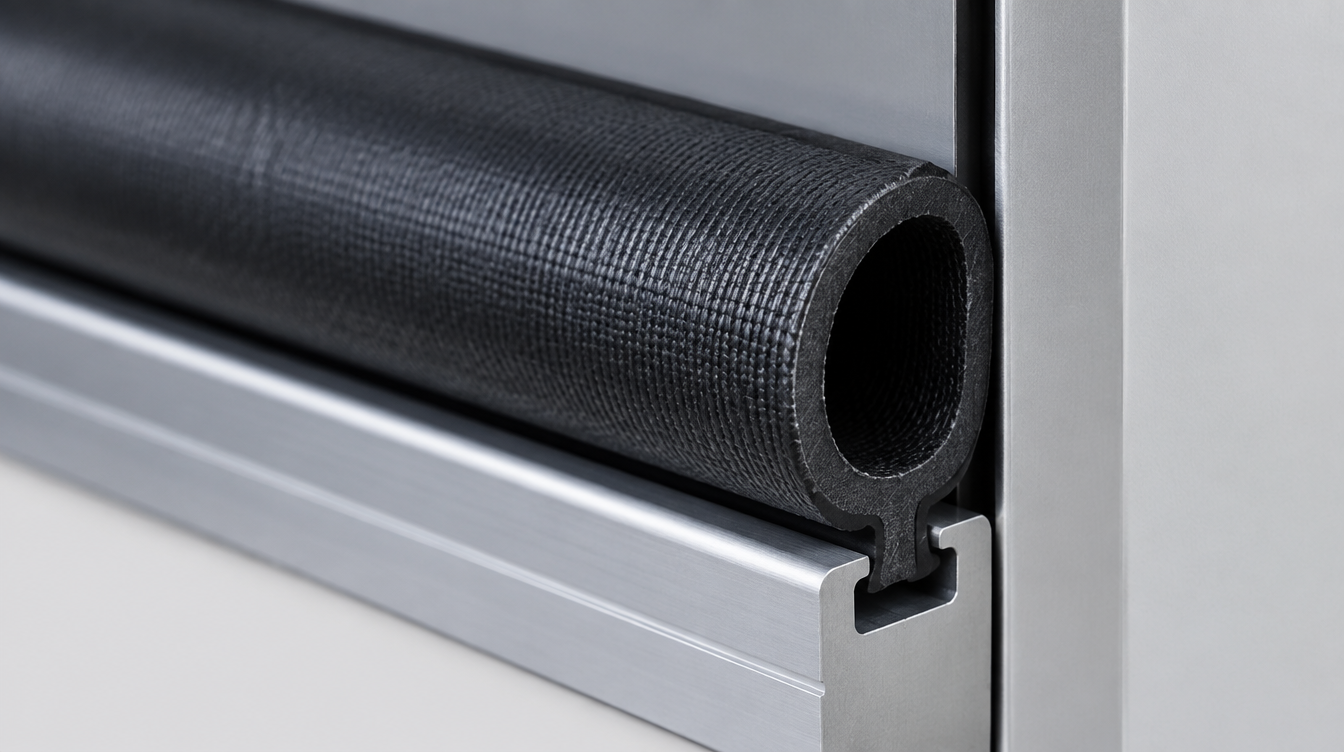
These requirements are met across a range of seal types: platinum-cured silicone tubing and hoses for fluid transfer, moulded gaskets and O-rings for vessels and fittings, custom moulded seals for equipment-specific geometries, and inflatable seals in certified compounds for isolators, cleanroom doors and process chambers that need a seal engaging only on demand. The right form depends on the application, but in every case the material certification and hygienic design travel with it.
Documentation and traceability
In regulated manufacturing, if it is not documented, it did not happen. A credible food- or pharma-grade sealing supplier provides the certification and compliance documentation your auditors expect, supports material traceability, and can confirm that compliance is maintained through any secondary processing such as splicing or moulding. Ask for the actual test report rather than a statement of compliance, check the edition of the standard it was tested against, and confirm it covers the specific compound and section you are buying. This paperwork is not bureaucracy — it is what lets you defend your process in an audit and qualify the seal in your validated system.
Specifying a pharmaceutical or food-grade seal well means aligning three things: a certified material, a hygienic design that cleans reliably and never takes a set, and the documentation that proves both. Get those right and the seal becomes an asset to your hygiene case rather than a risk to it.
Key takeaways
Specifying seals for a pharma or food process? Share your contact requirements and cleaning regime and we will recommend certified materials and a hygienic design — with the documentation your auditors need.
Need a custom sealing solution?
Talk to our engineers about inflatable seals, rubber diaphragms and custom extrusions built to your exact spec. We respond within one business day.
Frequently asked questions
Is 'FDA approved' rubber a real thing?
No. The FDA does not approve materials — approval applies to drugs, certain medical devices and food additives that go through premarket review. A rubber compound can only be described as compliant with the applicable 21 CFR provision, most commonly 177.2600 for repeated-use articles, supported by formulation and extractives data.
What is replacing USP Class VI, and when?
Revisions to USP General Chapters <87> and <88> take effect on 1 December 2026 and delete the Class I–VI classification. Biocompatibility assessment moves to ISO 10993, evaluated on a risk basis. Specify ISO 10993 for new qualifications; legacy Class VI data remains available where an existing specification calls for it.
Which EU regulation covers rubber seals in food contact?
There is no EU-wide specific measure for rubber. Regulation (EC) No 1935/2004 provides the framework and Regulation (EC) No 2023/2006 the GMP requirements, but Regulation (EU) No 10/2011 applies to plastics and not to elastomers. In practice, BfR Recommendation XXI is the recognised benchmark for rubber, alongside Council of Europe Resolution ResAP(2004)4.

Need a quote?
For custom rubber sealing solutions contact us. We will respond to you within 1 business day


.avif)