.png)


Posted on
August 14, 2026
Rubber Profiles vs Rubber Cord: Choosing the Right Extruded Shape
Rubber profile or rubber cord? Compare sealing performance, cost, tooling, splicing and applications to choose the right extruded shape for your job.
When you need an extruded rubber seal, one of the earliest choices is shape: a simple round cord or a shaped profile. It sounds trivial, but the decision affects sealing performance, tooling cost, ease of installation and how the seal is joined into a frame. This guide compares the two so you can pick the shape that fits both the gland and the budget.
What each shape is
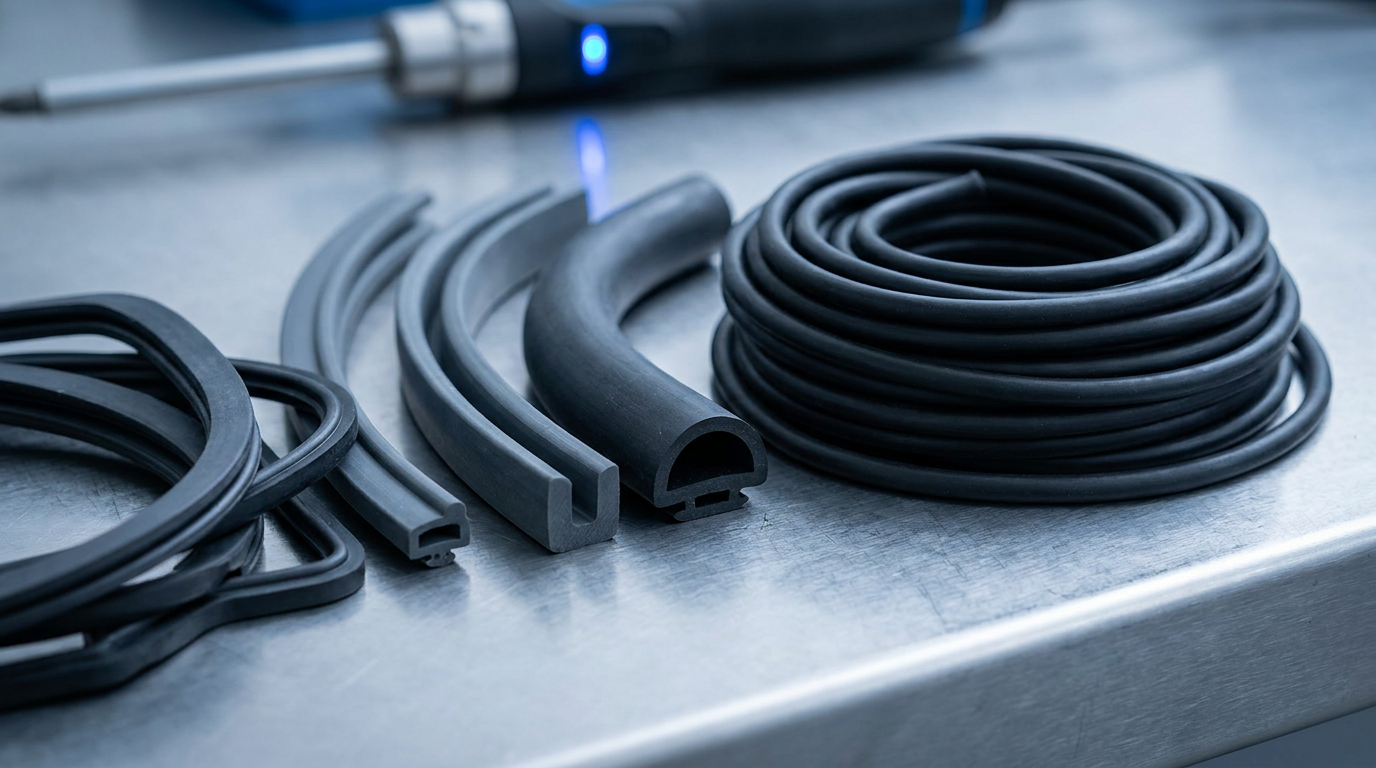
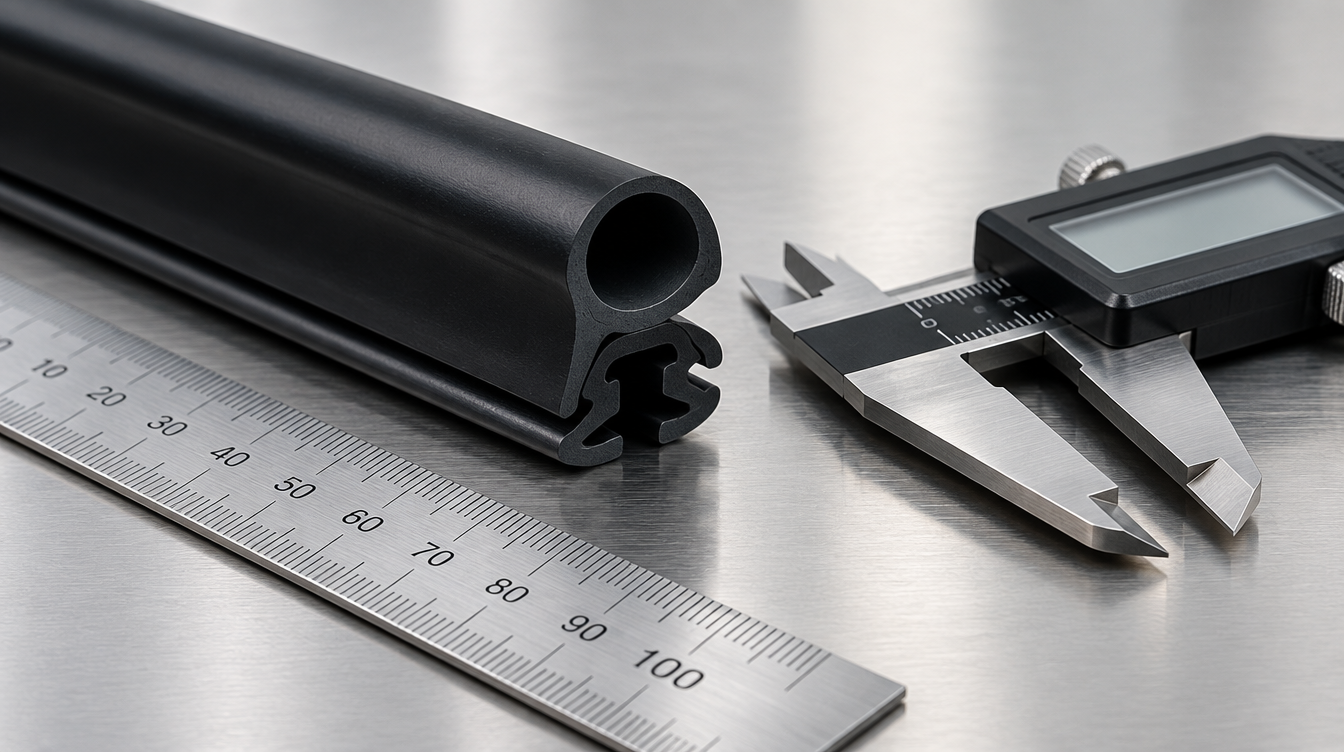
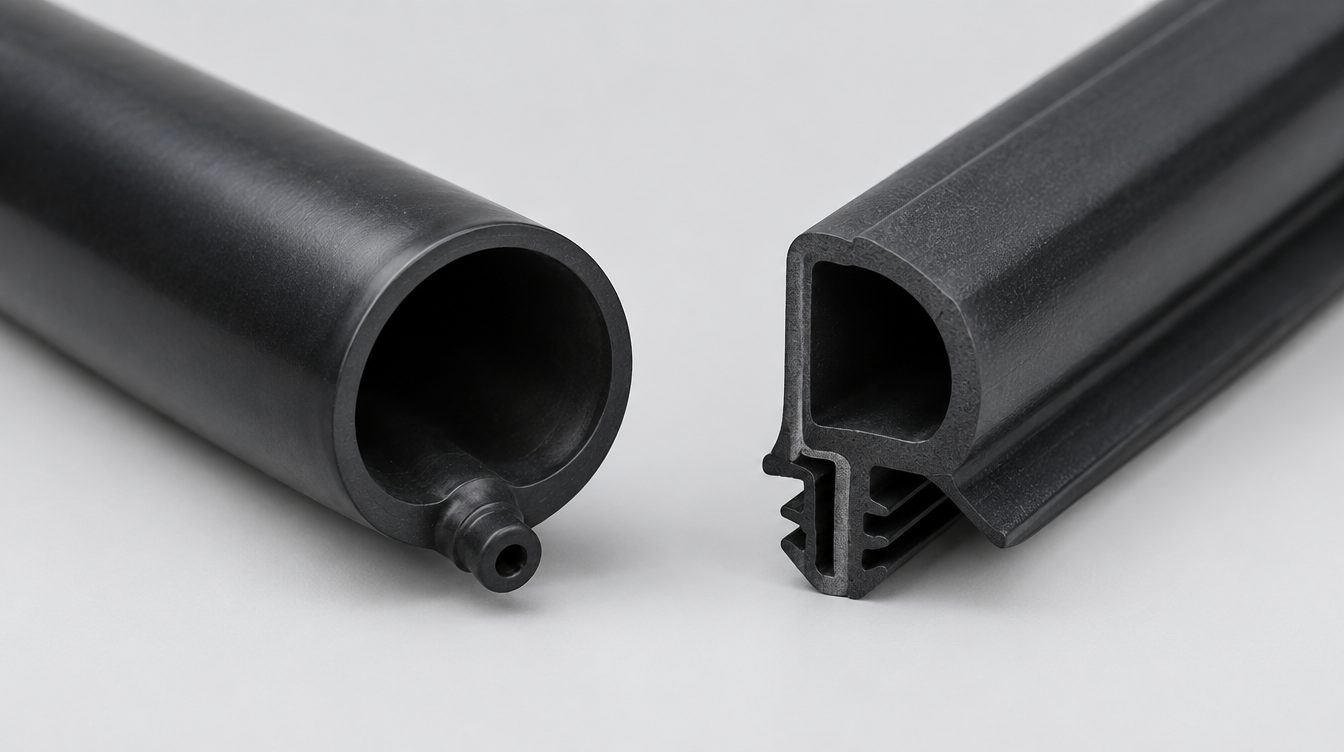
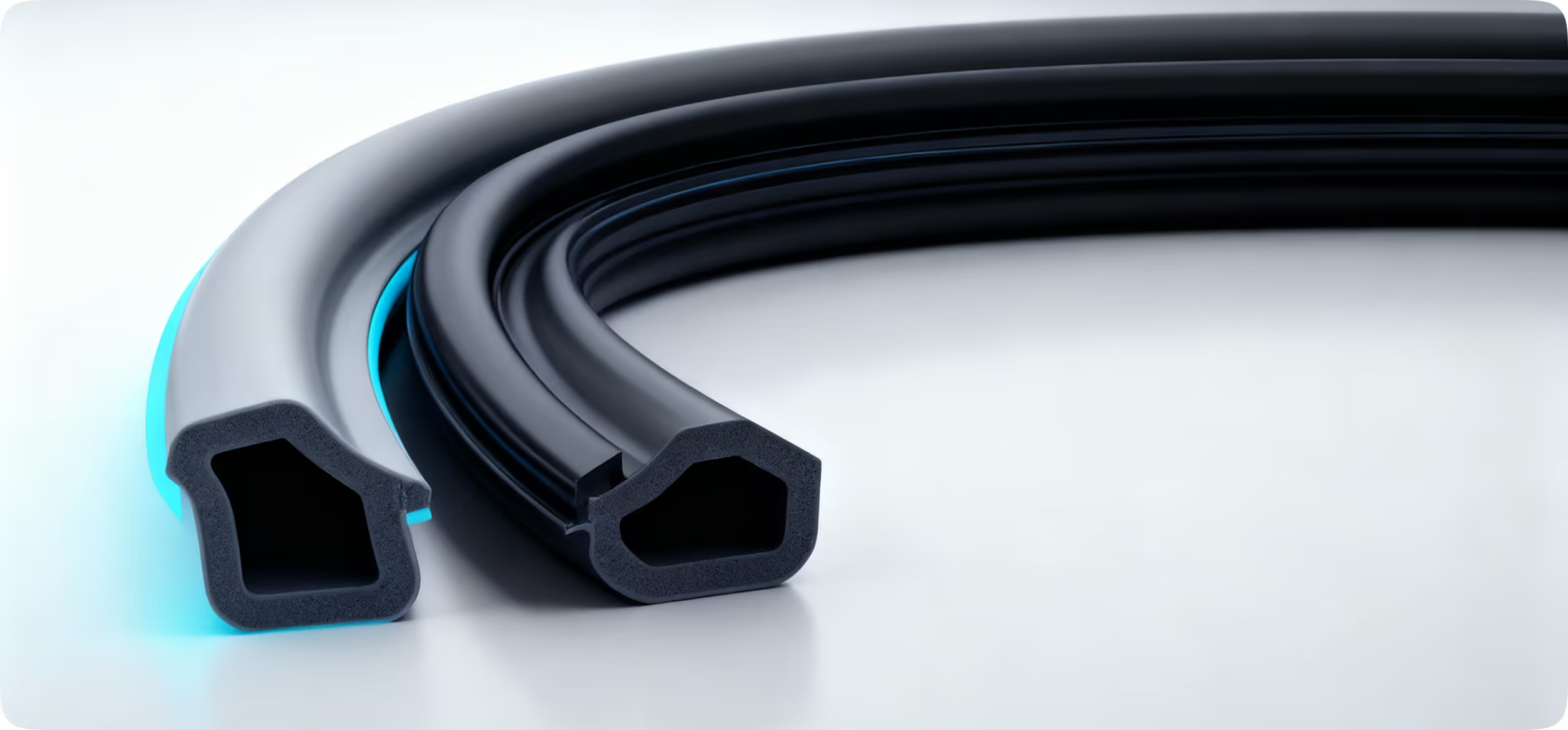
Rubber cord is a continuous round (or occasionally square) section of solid or sponge rubber — the simplest extruded shape there is. Rubber profile is a custom cross-section engineered for a specific job: a P-section, E-section, D-section, U-channel, hollow bulb, or a bespoke shape with lips, grooves and retention features designed around the application. Both are extruded and cured the same way; the difference is entirely in the cross-section and the tooling behind it.
Sealing performance
A round cord seals by being compressed in a groove, deforming to fill the gap. It works well where the gland is a simple, well-controlled groove and the sealing faces are flat and parallel. A shaped profile can do far more: a bulb section bridges a large or variable gap with low closing force, a lipped profile wipes and seals against an irregular face, and a co-designed retention foot holds the seal captive without adhesive. Where the sealing geometry is anything other than simple, a profile almost always seals better because it is shaped for the task.
Tooling and cost
Cord is the more economical shape. A round die is simple, standard cord sizes are often stocked, and there is little or no tooling investment for common diameters — which makes cord attractive for prototypes, low volumes and budget-sensitive jobs. A custom profile requires a purpose-designed and cut die, which is an upfront cost that is repaid over volume. The rule of thumb: for simple sealing at low volume, cord is cheaper; for a shape that improves function or assembly at production volume, the profile's tooling pays for itself in performance and reduced installation labour.
Installation and assembly
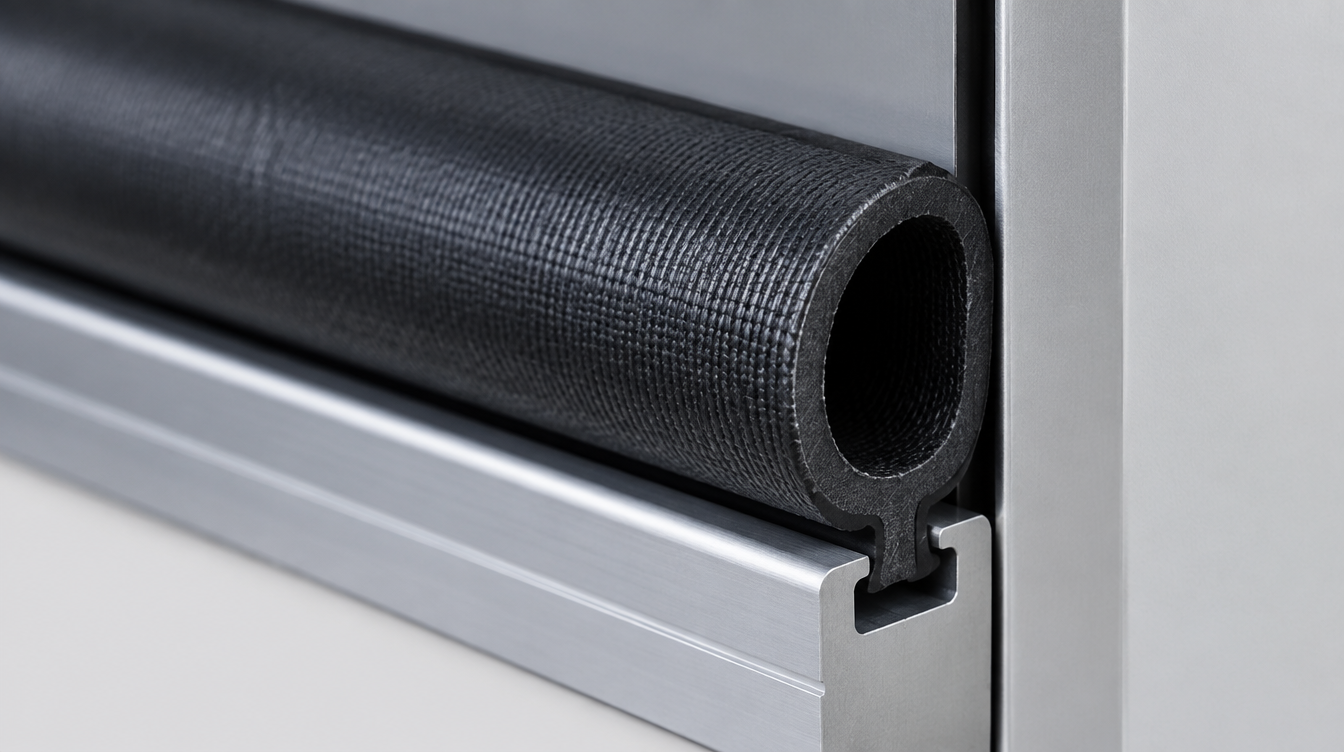
Shape drives how easily a seal goes in. Cord usually needs a groove and sometimes adhesive to stay put, and it relies on correct compression to seal. A well-designed profile can incorporate a snap-in foot, a dovetail or a self-retaining lip that locates positively and speeds assembly — valuable in high-volume production where seconds per unit matter, and in field service where a fitter needs the seal to stay where it is placed. If installation cost or repeatability is a concern, a profile designed for assembly often wins on total cost even if the part price is higher.
Joining and splicing
Many seals must form a closed loop around a door, window or hatch, which means the extruded length has to be joined. Both cord and profile can be spliced and vulcanised into continuous rings or frames, but the join is easier and more reliable on a round cord than on a complex profile, where the mating faces must align across the full cross-section. For framed seals, this is where extrusion meets the spliced-and-vulcanised process — the extruded length is cut, formed and joined into a seamless closed shape. Profiles with intricate sections need a manufacturer experienced in splicing them cleanly.
Sponge and solid variants
Both cords and profiles can be produced in solid or sponge (closed-cell) form, and the choice affects how the seal behaves. Solid rubber resists higher loads and offers greater strength and abrasion resistance, suiting duty where the seal is squeezed hard or wears against a moving face. Sponge compresses easily under low closing force and recovers well, making it ideal for lightweight sealing against dust, air and moisture where the mating hardware cannot apply much pressure — facade panels and enclosure lids, for instance. Factoring solid-versus-sponge into the shape decision often matters as much as cord-versus-profile.
Typical applications
A side-by-side comparison
It helps to see the trade-offs together. On tooling cost, cord wins — round dies are simple and common sizes are often stocked, while a profile needs a purpose-cut die. On sealing performance for anything beyond a simple groove, the profile wins because it can be shaped with lips, bulbs and retention features. On installation, a profile designed with a snap-in foot or self-retaining lip locates faster and more repeatably than a cord that needs a groove and sometimes adhesive. On splicing into a closed loop, a round cord joins more easily than a complex profile, though both can be spliced and vulcanised by an experienced maker. And on low-volume or prototype work, cord's minimal tooling makes it the pragmatic starting point.
How to decide
Start with the gland and the sealing face. If both are simple and the volume is low, a cord is the pragmatic, economical choice. If the geometry is complex, the gap is variable, closing force is limited, or assembly needs to be fast and repeatable — and the volume justifies tooling — a custom profile delivers better sealing and lower installed cost. Where the seal must form a closed loop, factor in the splice from the outset.
Many projects sensibly use both: cord for the simple runs and a profile where the sealing challenge is real. The mistake to avoid is defaulting to cord because it is cheaper to buy, on a gland that was never going to seal reliably with a round section — that is a decision that looks economical on the purchase order and expensive everywhere else.
Key takeaways
Not sure whether cord or a custom profile fits your gland? Share your sealing geometry and volume and we will recommend the right extruded shape — and splice it into a seamless frame if you need one.
Need a custom sealing solution?
Talk to our engineers about inflatable seals, rubber diaphragms and custom extrusions built to your exact spec. We respond within one business day.
Frequently asked questions
Can I replace an O-ring with spliced cord?
Often yes, particularly at large diameters where a moulded O-ring becomes impractical or uneconomic. A vulcanised seamless ring made from extruded cord is a standard solution. For high-pressure dynamic duty a moulded ring is still preferable.
Is a profile always better than a cord?
No. On a simple, well-machined groove with flat parallel faces and modest volume, a cord seals perfectly well and costs less. The profile earns its tooling when the geometry is awkward, closing force is limited, or assembly repeatability matters.
Should I choose sponge or solid?
Let closing force decide. If the mating hardware can only apply light pressure — a facade panel, an enclosure lid — sponge compresses and recovers where solid would simply hold the assembly open. Where the seal is squeezed hard or abraded, solid carries the load.

Need a quote?
For custom rubber sealing solutions contact us. We will respond to you within 1 business day


.avif)