.png)


Posted on
September 28, 2026
What Is an Inflatable Seal and How Does It Work
An inflatable seal uses compressed air, not mechanical closing force, to seal a door or panel. Here is how the tube, groove and pneumatic control system work together, and how to specify one correctly.
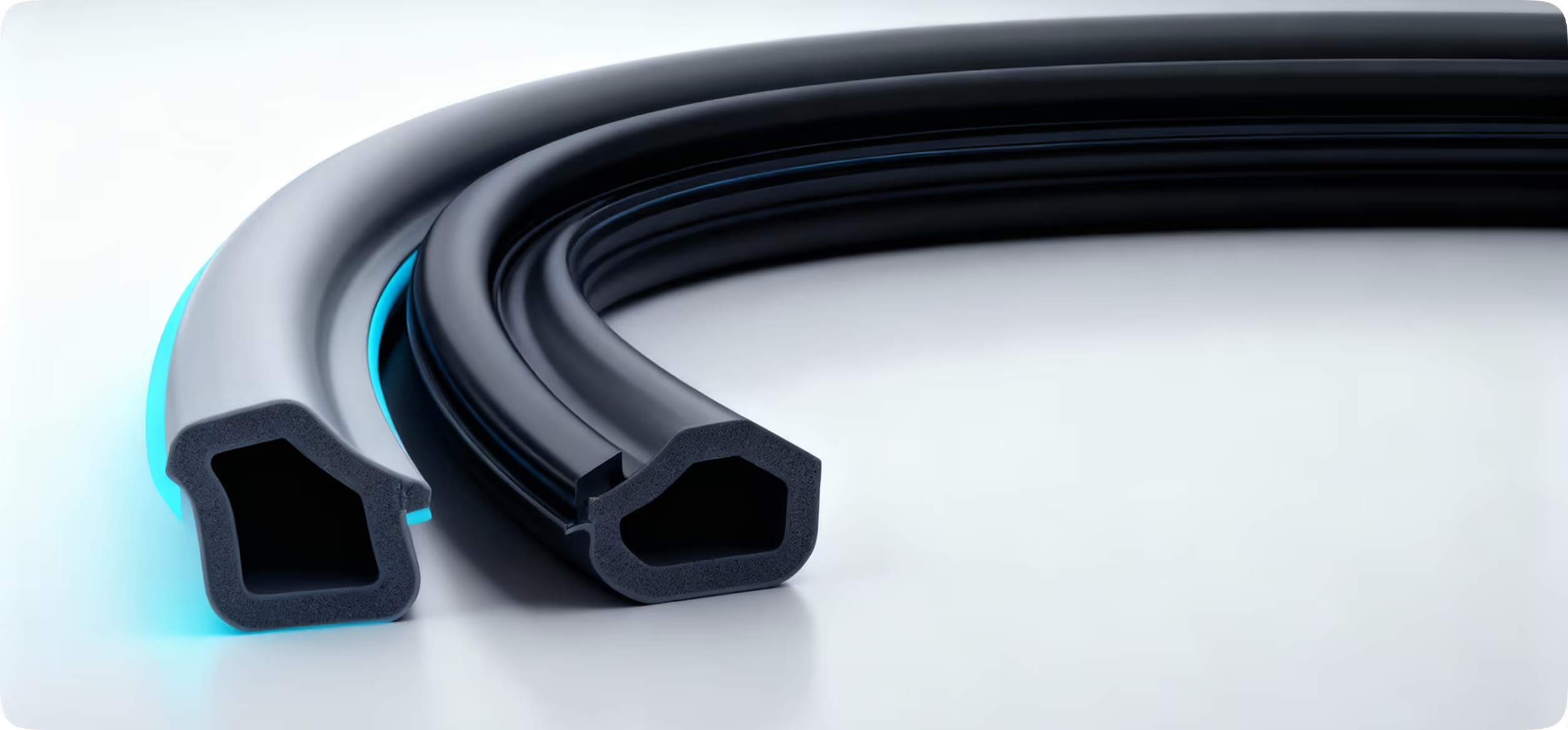
An inflatable seal is not a static rubber profile that happens to be hollow. It is a pneumatically actuated sealing system, and understanding that distinction is the starting point for specifying, sizing or troubleshooting one correctly. Where a static seal relies entirely on the mechanical force of a door or panel closing to compress rubber against a frame, an inflatable seal uses compressed air to expand a rubber tube into contact, independent of how much mechanical closing force is available.
This distinction matters most on rolling stock, where doors and gangway connections need to seal tightly against noise, draughts and pressure differentials while also fully retracting to allow free movement without wear, and it matters just as much wherever fire performance is a specification driver, as covered in our guide to EN 45545 hazard levels and operation design categories and our overview of fire-safe sealing solutions for rail and mass transit. This guide covers the mechanism, the materials, how to specify a system correctly, and where inflatable seals go wrong in service.
What Is an Inflatable Seal and How Does It Work
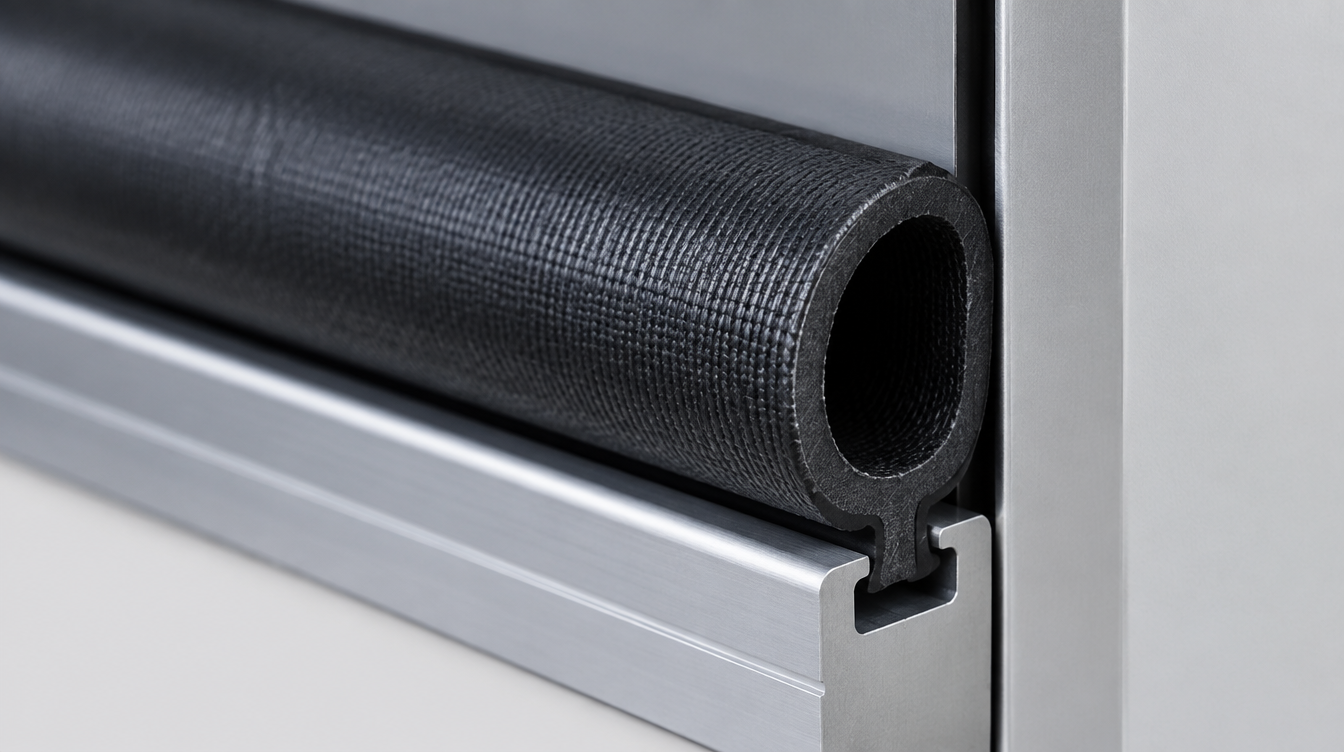
An inflatable seal consists of an elastomeric tube, typically reinforced with a fabric layer for dimensional stability and burst resistance, mounted into a retaining groove or profile around the perimeter of a door, panel or aperture. When the door or panel closes, a pneumatic control system delivers compressed air into the tube, inflating it so it expands outward and presses against the mating surface, forming the seal. When the door needs to open, the air is released, or actively vented, and the tube deflates back below the sealing surface, clearing the opening.
The mechanism has three distinct phases in every duty cycle. In the open or standby phase, the tube sits fully deflated inside its retaining groove, below the plane of the door or panel, so nothing drags or contacts the frame as the door moves. In the sealing phase, once the door reaches its closed position, a signal from the door control system triggers the pneumatic supply to deliver regulated compressed air into the tube, and the tube expands radially outward until it makes firm, even contact with the mating surface around the full perimeter of the aperture. In the release phase, before the door is permitted to reopen, the air is exhausted from the tube, either passively through a controlled bleed or actively through a vent valve, and the tube collapses back into the groove, clearing the door path.
On rolling stock, plug doors and gangway connections need a seal that performs two contradictory jobs: seal tightly enough to control noise, draughts and pressure differentials, particularly relevant on high-speed and tunnel-running vehicles, while also fully retracting to allow the door to move freely without dragging or wearing against the frame on every cycle. A static compression seal is always in contact, which means constant wear on both the seal and the frame with every door cycle. An inflatable seal is only in contact when inflated and sealing, which removes that constant wear cycle entirely. Most rail inflatable seal systems use filtered, dry compressed air already available on the vehicle for other pneumatic systems, regulated down to the specific pressure the tube requires, with inflation and deflation timing tuned to the door's operating sequence so passengers experience no perceptible delay.
Materials and Components Behind a Reliable Tube
Three physical elements make up an inflatable seal system, and all three must be correctly matched for the system to work reliably: the tube itself, the retaining groove or housing, and the pneumatic supply and control system.
The tube is the elastomeric, fabric-reinforced sealing element, sized and profiled for the specific gap and application. EPDM is the most common base elastomer for rail inflatable seal tubes, chosen for its ozone and UV resistance and a well-established path to flame retardant formulation for EN 45545 compliance, though silicone is also used where a wider usable temperature range or different chemical exposure profile is the priority, using compounds from the same families discussed in our guide to elastomer selection for rail sealing. Fabric reinforcement, commonly woven polyester or nylon, is embedded within the tube wall to control the direction and limit of expansion and to resist burst pressure over the tube's design life.
We are not publishing a generic cutaway diagram or a single standard tube construction here, because reinforcement type, ply count and wall thickness are chosen per application rather than fixed across our range, and quoting a generic figure would understate what a specific door geometry actually needs. If you send us the aperture perimeter, gap and duty cycle target, our engineers will work through the tube construction with you directly.
The groove or housing holds the deflated tube captive and correctly positioned around the door or panel perimeter. Groove geometry, depth and retention feature design directly affect whether the tube stays seated through thousands of inflation cycles or gradually walks out of position, which is one of the most common root causes of an inflatable seal that appears to underperform even though the tube compound itself is sound. The pneumatic supply and control system, the valve, regulator and piping that deliver and release air on the correct cycle, sets inflation pressure to reach adequate sealing contact force without over-stressing the tube or fabric reinforcement over repeated cycles.
Beyond the base elastomer choice, several properties determine how an inflatable seal actually performs in service: burst pressure margin relative to the operating inflation pressure, cycle life under repeated inflation and deflation, compression set and elastic recovery of the tube wall once deflated, and pressure uniformity achieved around the full perimeter of the aperture. A tube that inflates unevenly, reaching full contact pressure at the corners before the straight runs, or vice versa, will show localised leak paths even though the average pressure reading at the regulator looks correct. Pressure margin matters more than peak pressure: the relevant design question is not simply what pressure the tube needs to seal, but how much margin exists between the sealing pressure and the tube's tested burst or fatigue limit across its full duty cycle life. Pressure control errors are one of the most common preventable causes of premature failure, particularly for teams migrating from a static seal design where pressure was never a design variable at all.
Inflatable Seals vs Static Compression Seals
An inflatable seal draws its sealing force from compressed air pressure, independent of closing force, and makes no contact with the mating surface during standby, since the tube sits fully retracted below the sealing surface until inflated. A static compression seal, by contrast, draws its sealing force entirely from the mechanical closing force of the door or panel, and stays in continuous contact for as long as the door remains closed.
That difference drives everything else. An inflatable seal's wear is limited to the inflated dwell period per cycle, while a static seal experiences sliding or compressive wear on every open and close cycle. An inflatable seal requires the tube, groove and pneumatic control system to work together, adding system complexity that a static seal, built from rubber profile and a retention feature alone, does not carry. When an inflatable seal underperforms, the root cause is more often the pneumatic supply, a leak, a faulty valve or insufficient regulated pressure, than the tube itself, whereas a static seal's typical failure origin is compression set and material degradation of the rubber. In practice, inflatable seals suit high duty cycle doors that need to fully retract, such as plug doors, while static seals remain the simpler, lower-cost choice for lower cycle or infrequently opened apertures.
How to Specify an Inflatable Seal System
Specifying an inflatable seal correctly means specifying all three subsystems together rather than treating the tube as an isolated material selection. The specification should state the aperture perimeter and gap geometry the tube must seal across, the target inflation pressure and the tested pressure range for the tube design, the required cycle life in number of inflation and deflation cycles over the vehicle's service life, the fabric reinforcement type and tube wall construction, the groove or housing geometry the tube will be retained in, and the pneumatic control interface, including how inflation and deflation are triggered relative to the door operating sequence.
The system only works if all three elements, the tube, the retaining groove fit, and the pneumatic control, are correctly matched. A tube sized correctly for the gap but fed by an under-specified regulator will never reach full sealing contact. A correctly inflated tube seated in a poorly designed groove can walk out of position over repeated cycles. This is why inflatable seal specification is a systems decision, not just a material selection, and why we treat the tube, groove and pneumatic supply as one procurement package rather than sourcing them independently.
Manufacturing, Testing and Compliance
Inflatable seal tube manufacturing combines elements of extrusion and moulding depending on the profile shape, joint geometry required at corners, and whether the tube run is a closed loop around a full aperture perimeter. Straight lengths are commonly produced through the same processes used for our rubber extrusion range, while corner and joint sections often require moulding or vulcanised splicing, similar in principle to the joining techniques used in our spliced and vulcanised seals, so that the joint performs identically to the extruded tube body under repeated inflation rather than becoming a weak point. Because the tube and groove must work together, custom programmes typically co-design both elements rather than fitting a generic tube into an existing groove designed for a different sealing technology, drawing on the same profile design principles behind our rubber profile and dovetail seal ranges. Given the cycle life and burst margin requirements involved, new tube designs typically go through prototype runs and bench pressure-cycle testing before committing to production tooling, particularly on a new door platform rather than a like-for-like replacement.
Inflatable seal tube compounds intended for rail interiors and exteriors are subject to the same fire, smoke and toxicity compliance path as other rail sealing rubber, governed in Europe by CEN-CENELEC's EN 45545 series, with material and mechanical test methodology such as tensile strength, elongation and burst testing following ASTM International and ISO standards. Rail interoperability and rolling stock technical standards more broadly sit under the International Union of Railways (UIC), while pneumatic system design and pressure equipment practice commonly reference guidance published by bodies such as ASME. Before qualifying a new tube design, ask a supplier for tested burst pressure with the safety margin over the intended operating pressure clearly stated, cycle life test data at the actual operating pressure and temperature range, fabric reinforcement specification and bonding method, and a description of the traceability process linking a delivered tube batch back to its qualification test data. A supplier that can only provide generic elastomer literature values, rather than tested data on the actual tube construction, has not really qualified the design at all.
Where Inflatable Seals Are Used
On rolling stock, inflatable seals are most commonly specified on plug doors, where the seal needs to fully clear the opening for the door to slide or plug outward, gangway connections between vehicle sections, and increasingly on equipment cabinet and enclosure doors where a reliable, low-wear seal is needed for repeated access cycles. The same fundamental mechanism, tube, groove, pneumatic control, appears in adjacent sectors including aerospace and aviation access doors, marine watertight compartment doors, and process industries such as semiconductor and pharmaceutical processing, where an inflatable seal's ability to fully retract between cycles supports contamination control goals as well as mechanical wear reduction.
We are not going to quote a specific number of duty cycles or name individual rail operators and vehicle platforms here, since that track record varies by programme and we would rather share the actual test and field data relevant to your application directly than post a headline figure that does not apply to your door. Our engineers can walk through comparable programmes with you on request.
Key Takeaways
An inflatable seal is a systems decision built from a tube, a retaining groove and a pneumatic control loop, not a single material choice. Sealing force comes from regulated air pressure rather than mechanical closing force, which is what lets the tube fully retract between cycles and avoid the constant wear a static compression seal accumulates on every door movement. Getting the outcome right in service means specifying pressure margin, cycle life, fabric reinforcement and groove geometry together, verifying tested burst and cycle data rather than generic elastomer literature values, and treating the pneumatic supply as a first suspect, not an afterthought, when a seal underperforms.
Share your door or panel geometry, gap tolerance, cycle life target and available pneumatic supply, and our engineers will specify a tube, groove and control system matched to your application.
Need a custom sealing solution?
Talk to our engineers about inflatable seals, rubber diaphragms and custom extrusions built to your exact spec. We respond within one business day.
Frequently asked questions
What is the main advantage of an inflatable seal over a static rubber gasket?
An inflatable seal only contacts the mating surface when actively inflated, which eliminates the constant sliding wear a static compression seal experiences on every open and close cycle, extending service life and reducing drag on the door mechanism.
Can an inflatable seal fail even if the tube itself is undamaged?
Yes. Failure is commonly traced to the pneumatic supply, such as a leak, a faulty valve or insufficient regulated pressure, rather than the tube itself, which is why diagnosing a seal complaint should start upstream of the rubber component.
What is the difference between EPDM and silicone inflatable seal tubes?
EPDM generally offers strong weathering, ozone and UV resistance along with a well-established path to flame retardant formulation, making it common on rail exteriors. Silicone typically offers a wider usable temperature range and different flexibility at extremes, but the two also differ in fabric bonding behaviour, cost and compression set characteristics, so the choice should be matched to the specific application's temperature and exposure profile.

Need a quote?
For custom rubber sealing solutions contact us. We will respond to you within 1 business day


.avif)