.png)


Posted on
September 29, 2026
Inflatable vs Static Door Seals on Rolling Stock: When the Moving Seal Wins
Not every rail door needs an inflatable seal. Here is the engineering framework, duty cycle, sealing performance and wear tolerance, for choosing between inflatable and static door seals on rolling stock.
Not every rail door needs an inflatable seal. Specifying one where a static compression seal would do the job just adds unnecessary cost, a pneumatic control system, and another failure mode to maintain across the vehicle's design life. Equally, forcing a static profile onto a high-cycle plug door or gangway connection because it is cheaper on paper can generate years of noise, draught and leak complaints that cost far more to resolve after the vehicle is in revenue service than the seal choice would have cost to get right at the design stage.
The decision comes down to three linked variables: duty cycle, how many open and close events the seal sees over the vehicle's service life, the sealing performance requirement, acoustic, pressure, draught and dust control, and how much wear the door mechanism and frame can tolerate. This article works through that decision in engineering terms and cross-references the fire safety obligations that apply to both seal types under EN 45545 rail fire safety requirements.
What Are Inflatable and Static Door Seals?
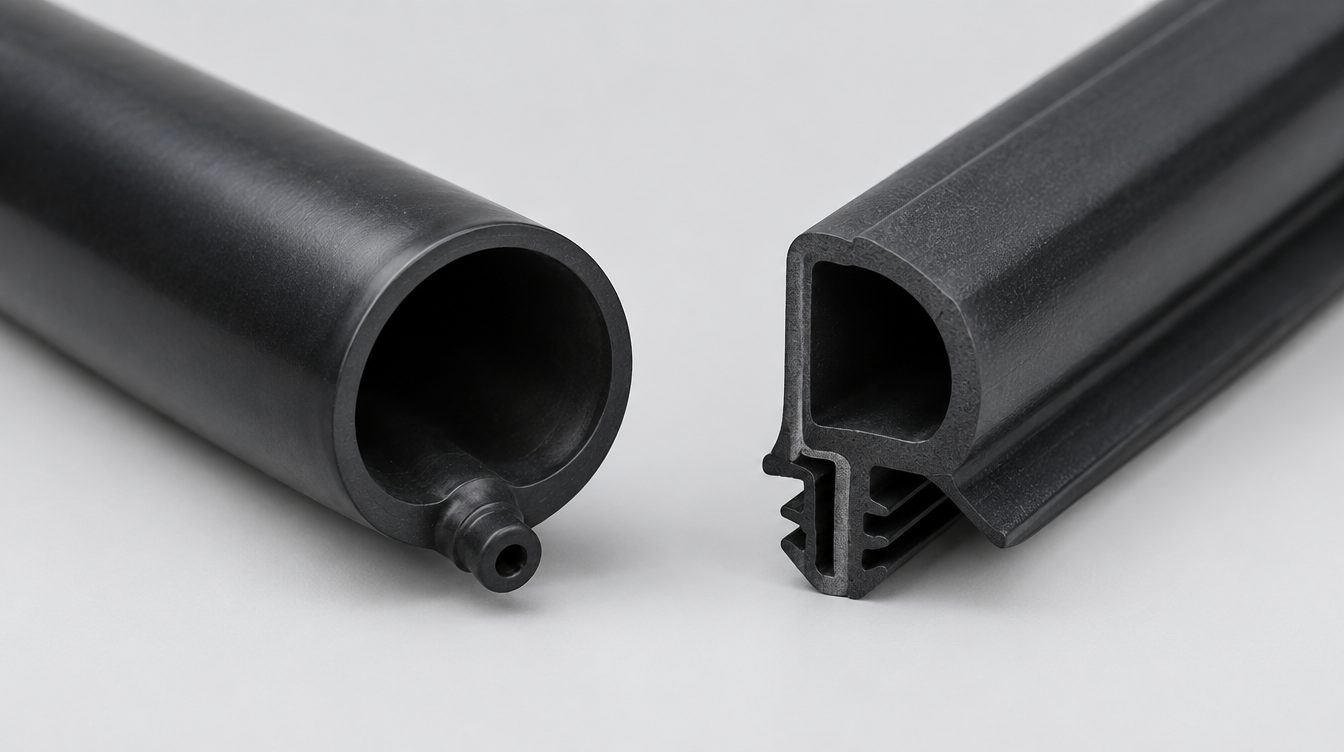
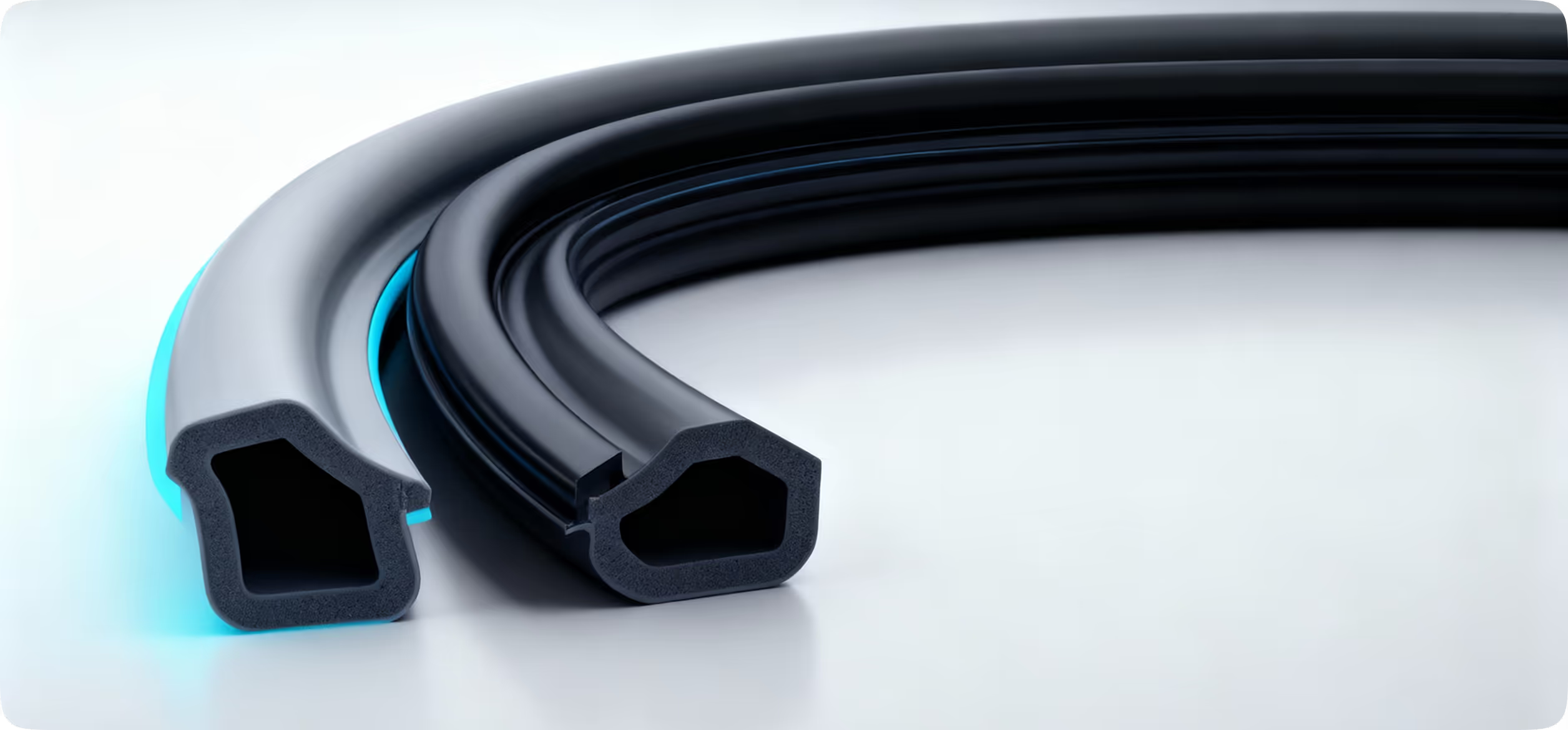
A static door seal is a fixed rubber profile, typically an extruded or moulded section, that is mechanically retained in a groove, channel or bonded location on the door leaf or frame. It performs its sealing function purely through elastic compression: the profile geometry is designed so that when the door closes, the rubber is squeezed against the mating surface and its own elastic recovery generates the contact force needed to exclude air, water, dust and noise. It has no moving parts of its own and needs no external energy source to function.
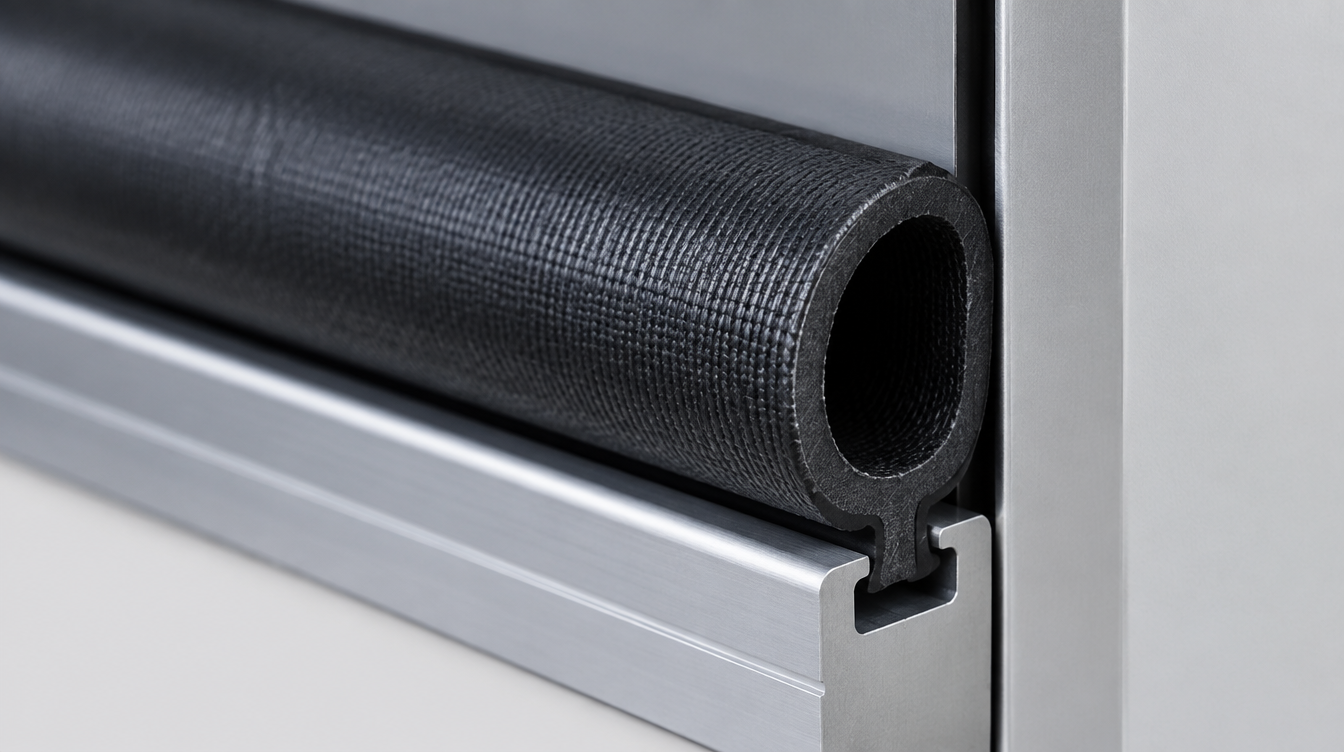
An inflatable seal is fundamentally different in principle even though it performs the same sealing job, as covered in more depth in our guide to how an inflatable seal works. It is a flexible elastomeric tube, usually fabric-reinforced, retained in a groove or channel, that is connected to a compressed air supply through a valve and control system. In its deflated state the tube sits clear of the door's travel path and generates no sealing contact at all. Only when the controller commands inflation does the tube expand radially to bridge the door gap and generate sealing contact force. That single difference, contact only on demand versus contact permanently, is the root of almost every practical trade-off between the two seal types, and it is the lens this entire article is built around.
A static seal's sealing force comes entirely from the compound's elastic memory. The profile is designed with a specific compression ratio, the percentage the rubber cross-section is squeezed down when the door closes, chosen so the seal generates enough contact force to seal the expected door gap without overloading the door closing mechanism or the latching hardware. Because the seal is in the closed position for the majority of its service life, it lives under sustained compressive load essentially all the time, which is exactly the condition compression set testing is designed to characterise. An inflatable tube generates sealing force pneumatically: internal air pressure pushes the tube wall outward in every direction, and the wall stops moving once it meets resistance, either the mating frame surface on the sealing face, or the retaining groove walls everywhere else. The fabric reinforcement inside the tube wall controls how the tube expands under pressure, directing expansion toward the sealing face rather than back into the groove. Because the tube is only under load while inflated, the rubber spends a much smaller fraction of its life under compressive stress than a static seal does, which is the mechanical basis for its wear advantage on high-cycle doors.
Both mechanisms ultimately rely on the same material property, an elastomer's ability to deform elastically and recover its shape. The difference is when that deformation is applied: continuously for a static seal, or cyclically and briefly for an inflatable seal. This is why compression set resistance dominates static seal compound selection, while fatigue resistance and fabric adhesion dominate inflatable tube compound and construction selection.
Materials and Construction Choices
Both seal families draw on the same core elastomer families, with selection driven by the vehicle's operating environment rather than by seal type alone. EPDM is the default choice for exterior door seals on rolling stock because of its strong resistance to ozone, UV and weathering, both for static profiles and inflatable tube covers, as discussed further in our guide to elastomer selection for rail sealing. Silicone is favoured where a wider service temperature range or better long-term compression set performance at temperature extremes is required, and is common in premium gangway and vestibule applications. Nitrile and fluorosilicone compounds appear where oil, fuel or hydraulic fluid exposure is a realistic risk, such as near underframe access panels, and FKM is reserved for the most chemically aggressive or highest-temperature edge cases, rarely needed on passenger door seals specifically.
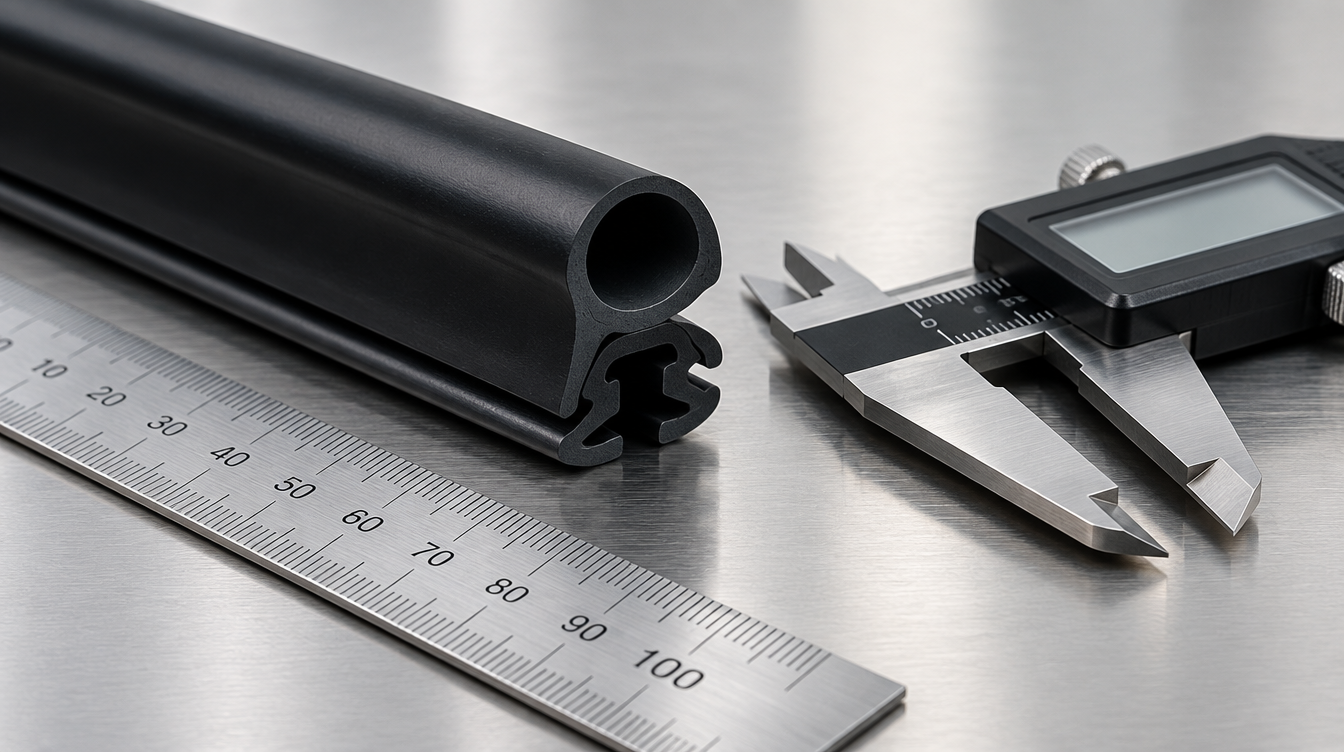
Static door and window seals on rolling stock are produced as extruded profiles, spliced into continuous loops with a vulcanised joint for frame-perimeter applications through our spliced and vulcanised seals process. Sponge or cellular rubber profiles offer lower closing force for a given compression, which matters where door actuator force is limited, while bonded and mechanically retained variants are used where the seal needs a rigid metal carrier for dimensional stability along a long door bottom run. Inflatable tubes are built around a fabric-reinforced elastomer wall, where fabric ply count, weave and orientation govern the tube's safe stroke range and burst pressure margin, driven by the expected inflation pressure, cycle count and gap range the tube needs to bridge. Custom tube profiles, whether round, D-shaped or bespoke sealing-face geometries, are typically produced through custom molded seals tooling to match a specific door aperture geometry.
The Properties That Actually Drive the Decision
Four measurable properties determine whether an inflatable or static seal is the right specification for a given door, and understanding each one is more useful than starting from a type preference. Compression set, typically measured to ASTM D395 or the equivalent ISO 815 method, quantifies how much a compressed rubber sample fails to recover its original thickness after the load is removed. For a static seal held under permanent compression, poor compression set resistance translates directly into lost sealing force over time. An inflatable tube's fabric reinforcement is flexed on every inflate and deflate cycle, so fatigue resistance, how many cycles the fabric-to-rubber bond and the fabric itself can withstand before cracking or delamination, is the inflatable seal's equivalent limiting property.
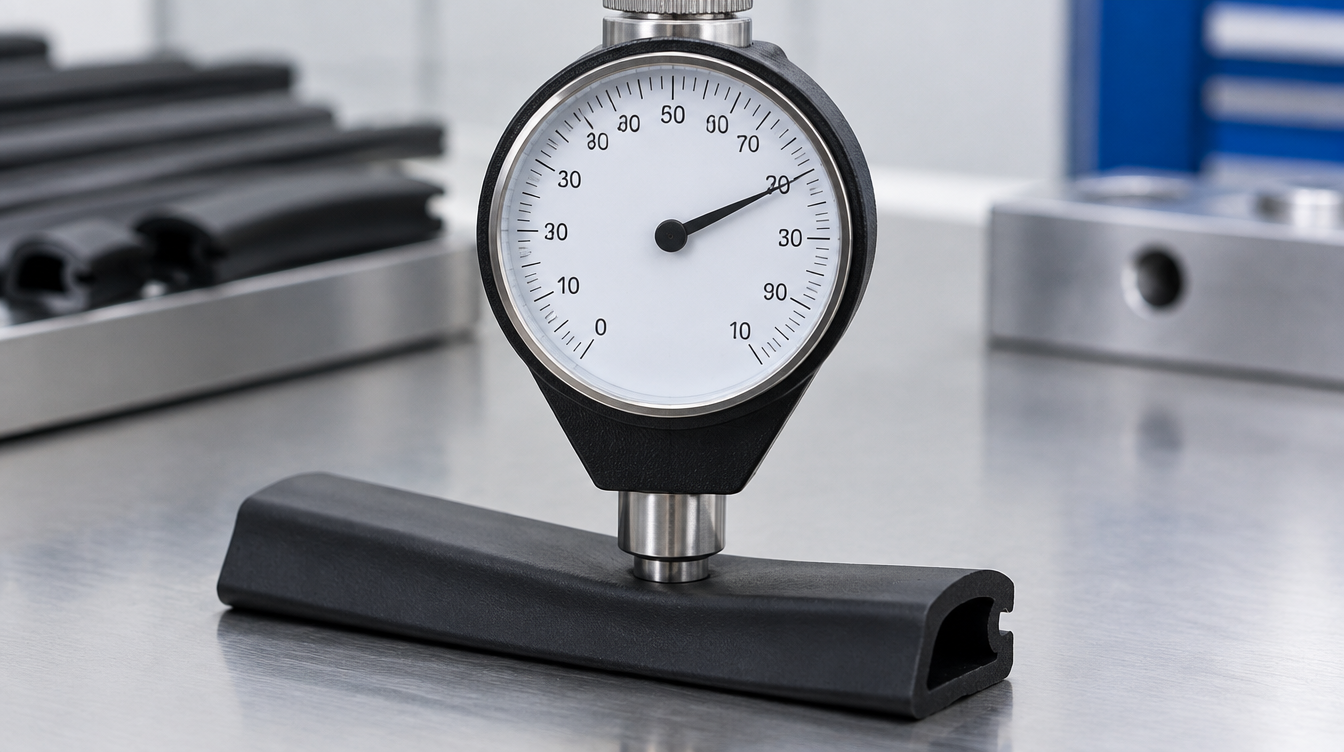
Shore A durometer hardness governs how much force a given compression, for a static seal, or inflation pressure, for an inflatable seal, generates against the mating surface. Softer compounds seal well at lower forces but may not recover as crisply from long-term compression, while harder compounds resist set better but need more force to achieve full sealing contact. Both seal types must also tolerate the full external temperature range the vehicle will operate in, since exterior door seals see direct sun, cold-soak conditions and de-icing chemical exposure alongside ozone and UV resistance for continuously exposed surfaces.
We do not publish a fixed cost or duty-cycle rule of thumb for recommending inflatable over static seals here, because the right answer depends on the specific door's cycle count, sealing performance target and available pneumatic infrastructure on that vehicle platform, and a generic figure would not reflect real project economics. Send us the door's duty cycle and sealing requirement and our engineers will work through the comparison with you directly.
Where Each Seal Type Wins on Rolling Stock
Plug doors on metro and high-frequency-stop vehicles are the clearest case for an inflatable seal. These doors see extremely high daily cycle counts, they need to fully clear the door opening, which a compressed static seal sitting in the door's path cannot do without dragging across the frame, and the sealing performance requirement, noise, pressure wave and draught control at speed, degrades noticeably if the seal loses compression set over just a few years of continuous contact. Gangway connections between vehicle sets face a structurally similar case: high cycle counts combined with a genuine sealing performance need for passenger comfort and acoustic isolation between cars.
Lower-cycle applications, equipment or maintenance access panels opened infrequently, cab door surrounds, and locations where the sealing performance requirement is modest, are often better served by a well-specified static seal with a properly chosen compound and profile geometry. In these cases the added cost and mechanical complexity of a pneumatic control system is simply not repaid by a meaningful performance gain, and a static profile is both cheaper to install and has fewer components that can fail.
We are not citing a specific named before-and-after case here, since we would rather walk a prospective client through comparable, relevant programme history directly than post a headline figure that may not map onto your platform. Our engineering team can share that context on request.
How to Select the Right Seal Type
The question to ask first is not which seal type is better, but how many open and close cycles this seal will see over the vehicle's design life, and what happens to sealing performance if the seal takes a permanent set. A high cycle count combined with a real sealing performance requirement points toward an inflatable seal. A lower cycle count or a less demanding sealing requirement points toward a static seal, with cost and mechanical simplicity as the deciding factor at that point.
In practice, this means estimating realistic daily and annual door cycle count over the full vehicle design life rather than a nominal duty rating, defining the sealing performance requirement in measurable terms such as an acoustic target, pressure differential, draught limit or dust ingress class, confirming whether the door must fully clear its aperture when open, checking whether a compressed air supply and control architecture already exists on the vehicle platform, confirming the fire, smoke and toxicity hazard level required under EN 45545 for the vehicle operating category, and weighing maintenance access against a static seal's single failure mode versus an inflatable system's multiple, individually serviceable components. This decision does not have to be made once for the whole vehicle: different doors and access points on the same platform frequently warrant different seal types, since a high-frequency passenger plug door and an infrequently opened underframe access panel rarely share the same sealing requirement even though they sit on the same vehicle.
Manufacturing, Testing and Fire Safety Compliance
Static profiles for rail door applications are typically produced through continuous extrusion, then either cut to length and mechanically retained, or spliced into a closed loop with a vulcanised joint for frame-perimeter seals, using our rubber extrusion process. Inflatable tube manufacturing adds an additional dimension: the fabric reinforcement layer must be built into the tube wall during moulding or extrusion, not applied afterward, and the retaining groove or channel that houses the tube in its deflated state is typically a custom-machined or custom-extruded component matched to the specific door frame. Because the tube and groove are a matched system, dimensional tolerances on both sides need to be controlled together rather than specified independently.
Any elastomer used inside the passenger saloon envelope, whether in a static profile or an inflatable tube, is subject to the same fire, smoke and toxicity requirements under CEN-CENELEC's EN 45545 series, with hazard level determined by the vehicle's operating category and the seal's fitted location. Compound qualification testing for both seal families draws on standard elastomer test methods published by ASTM International and ISO, covering compression set, tensile strength, elongation, ozone resistance and accelerated ageing. Rolling stock interoperability and vehicle-level requirements more broadly are coordinated internationally through bodies such as the International Union of Railways (UIC). Traceability matters for both seal types on a rail programme, since batch and material certification records need to be retrievable years into the vehicle's service life to support incident investigation, warranty claims or fleet-wide retrofit decisions.
Key Takeaways
Choosing between an inflatable and a static door seal is a duty-cycle and sealing-performance decision, not a default preference for one technology over the other. A static seal wins on cost and mechanical simplicity for lower-cycle, less demanding applications, while an inflatable seal earns its added complexity on high-cycle doors, such as metro plug doors and gangway connections, where continuous contact would otherwise degrade sealing performance through compression set. Both seal families draw on the same elastomer options and carry the same EN 45545 fire, smoke and toxicity obligations, so the decision should be made door by door against measured cycle count and sealing requirements, not assumed for the whole vehicle at once.
Our engineering team can help you decide between inflatable and static seal designs based on your door's actual duty cycle and sealing performance requirement.
Need a custom sealing solution?
Talk to our engineers about inflatable seals, rubber diaphragms and custom extrusions built to your exact spec. We respond within one business day.
Frequently asked questions
Is an inflatable seal always the better choice for a rail door?
No. It is the better choice where cycle count and sealing performance requirements are high enough to justify the added cost and pneumatic complexity. For lower-cycle or less critical applications, a well-specified static seal is often the more sensible engineering and commercial choice.
Can a vehicle use static seals on some doors and inflatable seals on others?
Yes, and this is common practice where different doors or access points on the same vehicle have genuinely different cycle counts and sealing performance requirements, such as a high-frequency passenger plug door versus an infrequently opened equipment access panel.
Do inflatable seals need to meet the same fire safety standards as static seals on rail vehicles?
Yes. Any elastomer used inside the passenger saloon envelope, whether in a static profile or an inflatable tube, is subject to the same EN 45545 fire, smoke and toxicity requirements for its hazard level and vehicle operating category.

Need a quote?
For custom rubber sealing solutions contact us. We will respond to you within 1 business day


.avif)