.png)


Posted on
September 30, 2026
Sizing an Inflatable Seal: Door Gap Tolerance, Stroke and Inflation Pressure
An undersized inflatable seal never reaches full sealing contact; an oversized one fatigues early. Here is the engineering method for sizing gap, stroke and inflation pressure correctly on rail door applications.
An inflatable seal that is undersized for its gap will never achieve full sealing contact, no matter how much air pressure is applied. One that is oversized will over-stress the fabric reinforcement on every cycle and fail early. Sizing an inflatable seal correctly starts with measuring the real, as-built gap, not the drawing tolerance, because the two are rarely identical once a vehicle has been through fabrication and fit-out.
This article sets out the engineering method for specifying inflatable seals for rail door applications: how to establish the real gap range, how to translate that range into stroke and deflated clearance requirements, and how inflation pressure is set against the tube's actual construction rather than a generic default. It builds on the design fundamentals covered in our guide to how an inflatable seal works, and connects directly to the fire safety obligations that apply to any seal fitted inside a passenger vehicle envelope under EN 45545.
Why Inflatable Seal Sizing Is Different From Static Seal Sizing
A static seal's sizing problem is essentially fixed once the profile and compression ratio are chosen: the rubber cross-section is picked so that closing the door compresses it by a known percentage, and that percentage stays roughly constant across the seal's service life within the elastic range of the compound. An inflatable seal's sizing problem is dynamic in a way a static profile's never is: the tube has to change diameter substantially, from a fully retracted state that clears the door's travel path to a fully expanded state that bridges the sealing gap, on every single cycle, and it has to do that correctly across the full range of gap variation the real door presents, not just at one nominal dimension.
That is why sizing an inflatable seal is fundamentally a tolerance problem before it is a materials problem. Get the gap measurement wrong, and no amount of good compound selection, fabric reinforcement or pressure tuning will make the seal perform reliably in service. This is also why our companion article on when an inflatable seal beats a static seal on rolling stock matters as a precursor decision: sizing only becomes this involved once inflatable has already been chosen as the right seal type for the application.
How Gap, Stroke and Pressure Interact
Nominal drawing dimensions assume perfect fabrication. In practice, door aperture gaps vary along their perimeter due to normal manufacturing and assembly tolerance stack-up, and this variation is exactly what the seal has to absorb. A door frame welded, bolted and fitted by real people and real machines, onto a vehicle body that has its own dimensional variation, will not present a perfectly uniform gap around its full perimeter, and treating the drawing figure as if it were that uniform value is the single most common sizing error in inflatable seal specification.
Stroke is how far the tube needs to expand from its fully deflated diameter to its inflated, sealing diameter. It needs to comfortably cover the maximum gap observed during measurement, with margin, while the tube's deflated diameter needs to sit safely clear of the door's moving path so it never drags or catches while retracted. Stroke is not a single number to be maximised; it is a designed range bounded on one side by the largest gap the tube must bridge and on the other by how much expansion the fabric reinforcement can safely tolerate on every cycle without accelerating fatigue.
Inflation pressure is not simply more is better. It needs to be high enough to generate adequate sealing contact force across the full gap range that has been measured, but not so high that it repeatedly over-stresses the fabric reinforcement inside the tube on every single cycle, which accelerates fatigue and shortens service life. The correct pressure is compound- and construction-specific, tied to the tube's fabric reinforcement rating and wall thickness, not a generic figure that applies across all tube constructions. Gap, stroke and pressure are not independent variables to be optimised one at a time: a gap range that is wider than expected forces either a larger stroke, meaning more fabric strain per cycle, or a higher pressure, meaning more force per cycle, to bridge reliably, and both of those trade directly against fatigue life. Getting the gap measurement right upstream is what keeps the other two variables inside a safe, sustainable design window.
Tube Constructions and Reinforcement Types
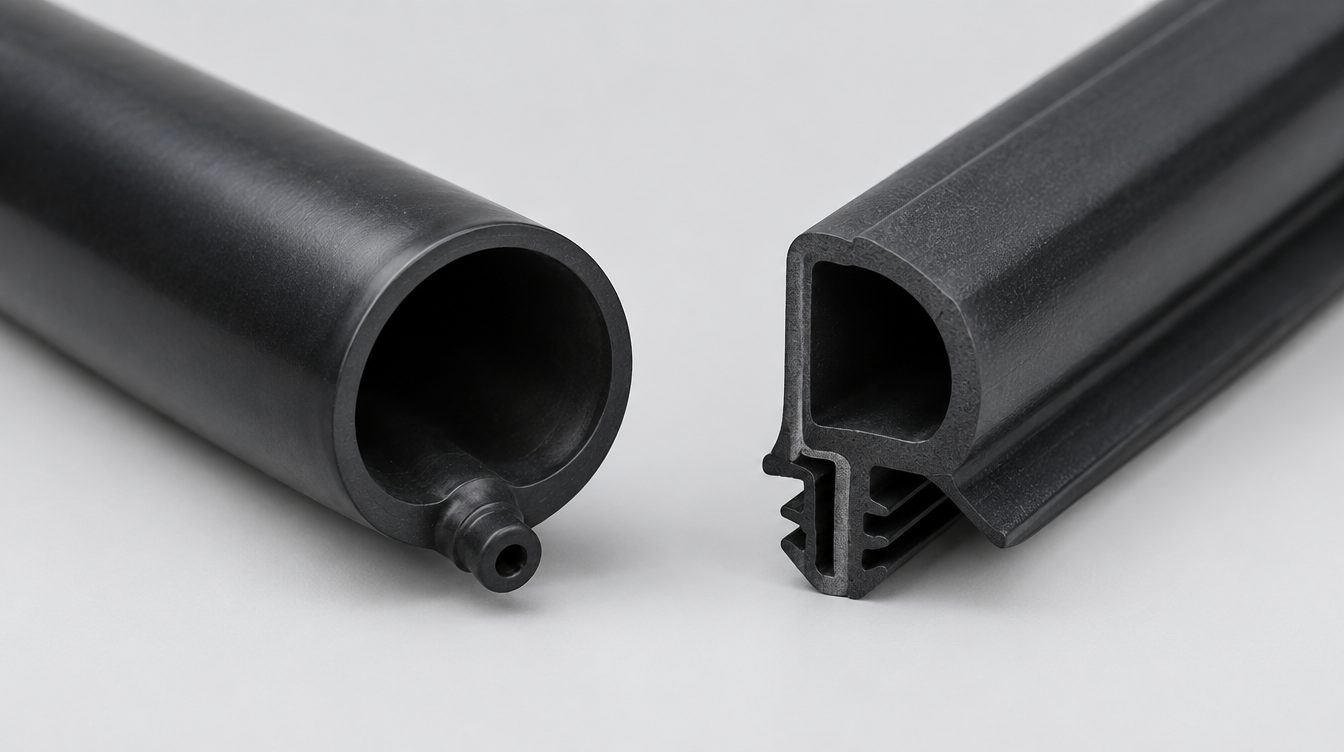
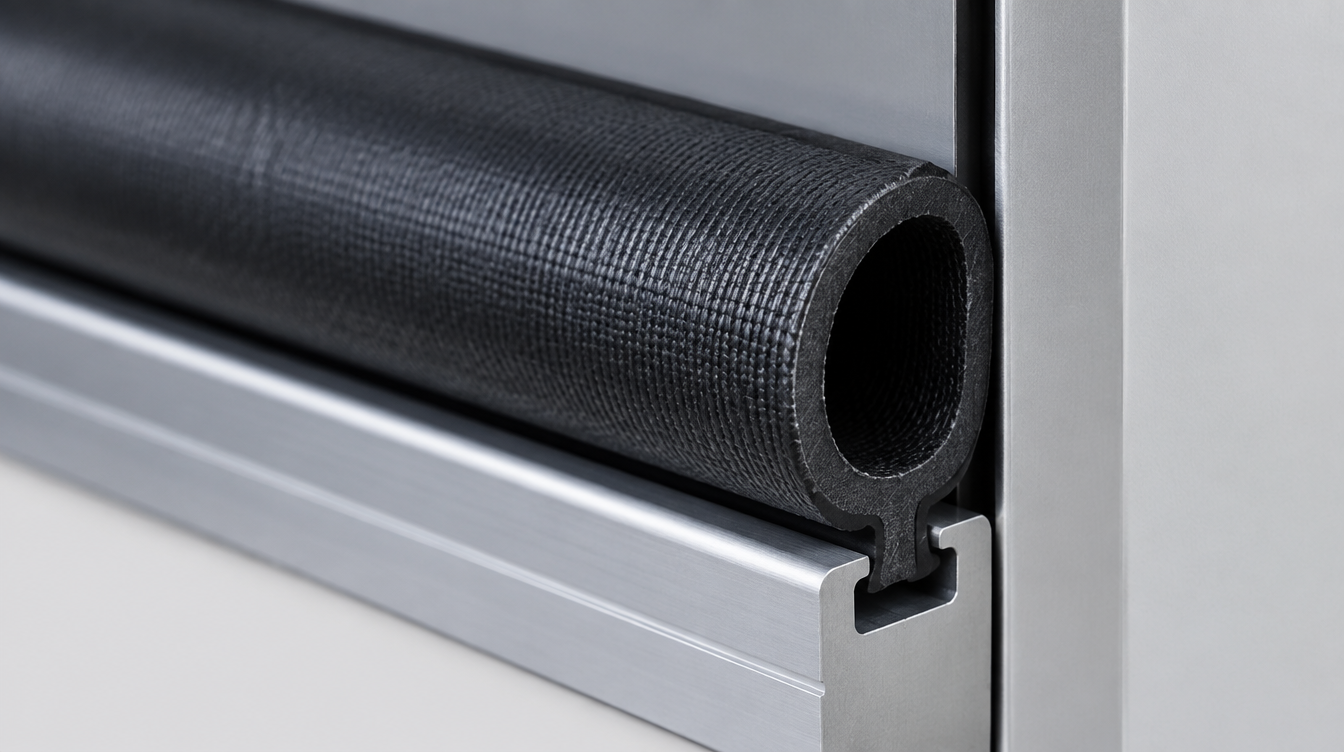
Fabric reinforcement type and wall thickness affect both the safe stroke range and the correct inflation pressure, so sizing and pressure recommendations are specific to the exact tube construction, not the elastomer alone. A single-ply reinforced tube and a multi-ply reinforced tube of the same outer diameter and the same base elastomer can have meaningfully different safe stroke ranges and different pressure ratings, which is why the reinforcement construction is one of the first decisions to lock down before sizing calculations begin.
Elastomer selection still matters, but mainly for environmental resistance and temperature range rather than for the stroke and pressure calculation itself. EPDM remains the default for exterior rail door applications given its ozone and UV resistance, and silicone is selected where wider temperature range or superior long-term compression set at extremes is needed, as detailed in our guide to elastomer selection for rail sealing. For applications with oil, fuel or hydraulic fluid exposure, nitrile or fluorosilicone compounds are more appropriate base elastomers regardless of the reinforcement construction chosen. Custom tube geometries and cross-sections, beyond a standard round profile, are typically produced through custom molded seals tooling matched to the specific door frame and groove design.
Key Properties That Govern Safe Sizing
Every inflate-deflate cycle flexes the fabric-to-rubber bond line inside the tube wall. The number of cycles a given construction can withstand before fatigue cracking or delamination begins is directly related to how much strain each cycle imposes, which is a function of the stroke the tube is asked to deliver relative to its rated safe stroke range. The fabric reinforcement's tensile strength and the compound's elongation at break, both measurable to standard elastomer test methods published by ASTM International, set the outer bound on how far a tube can safely expand under pressure before risking permanent damage or burst.
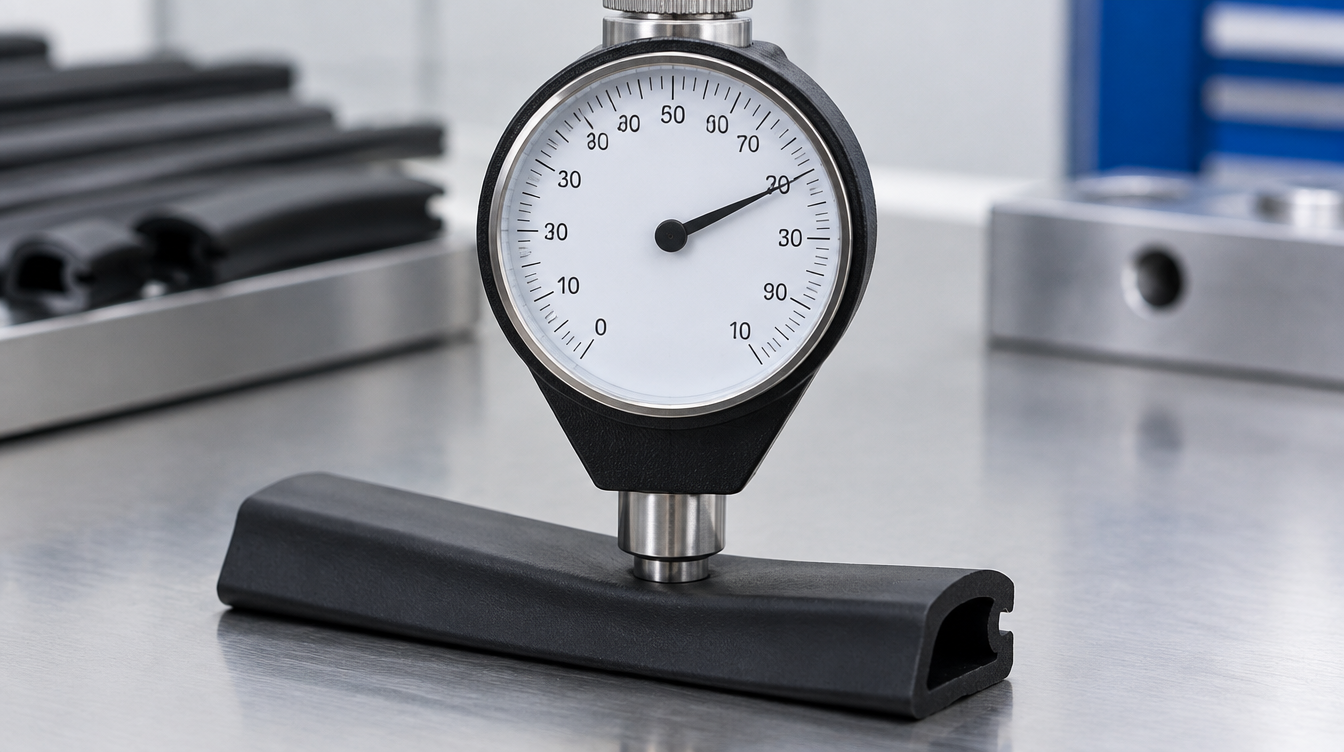
Wall thickness and Shore A durometer together determine how much pressure is needed to achieve a given expansion, and how much sealing contact force results at full inflation. A thinner wall or softer compound expands more readily at lower pressure but may offer less resistance to abrasion in the retention groove; a thicker wall or harder compound needs more pressure to reach the same stroke but can tolerate more mechanical wear. The tube's own manufacturing tolerance on deflated and inflated diameter adds to, rather than replaces, the door gap tolerance already measured, so a sizing calculation that accounts for door gap variation but ignores the tube's own dimensional tolerance is still an incomplete calculation.
We are not publishing a fixed table of standard inflation pressure ranges by tube construction and fabric reinforcement type here, because the correct pressure for a given construction is confirmed against that construction's own fatigue and cycle-life test data rather than read off a generic chart, and a chart divorced from that testing could misrepresent what a specific tube can safely handle. Send us your tube construction or application requirement and our engineers will confirm pressure against the relevant test data directly.
Where Precise Sizing Matters Most
Sizing precision matters most wherever the consequence of getting it wrong is expensive to fix after the fact. On rail rolling stock, plug doors and gangway connections are the clearest case: they sit inside the passenger envelope, they cycle at high frequency, and a sizing error discovered after vehicles are already in service means a fleet-wide retrofit rather than a design-stage correction. The same underlying method, measure the real assembled gap, set stroke and clearance to that measured range, and set pressure to the tube's actual construction, applies equally to inflatable seal applications outside rail, including cleanroom and process equipment door seals, autoclave and pressure vessel closures, and large access hatch seals in industrial equipment, wherever a moving inflatable seal has to bridge a gap defined by someone else's fabrication tolerance.
Step-by-Step Sizing Method
The method runs in a fixed order because each step depends on the one before it. First, establish the real door gap rather than the nominal gap, by measuring the actual gap at multiple points around the perimeter of a representative sample of doors, not just one, and retaining the full observed range rather than averaging it away, since a single measurement cannot capture how gap varies around a real aperture. Second, determine required stroke: once the real gap range is known, stroke can be set to comfortably cover the maximum gap observed, with margin, while confirming the deflated diameter sits safely clear of the door's moving path so it never drags or catches while retracted. Margin matters here because the measured sample, however representative, is still a sample, and a small margin protects against the outlier door that falls just outside the measured range.
Third, confirm the tube construction and reinforcement needed to deliver that stroke safely, matched to supplier construction data. Fourth, and last, set inflation pressure, once stroke and construction are fixed, because pressure is the variable most sensitive to getting wrong in the direction of more. Pressure should be set to the lowest value that reliably achieves full sealing contact across the measured gap range on the confirmed tube construction, not to a round number carried over from an unrelated project or a different tube construction, and the design should then be validated against fatigue and cycle-life test data for that confirmed construction and pressure before it is finalised.
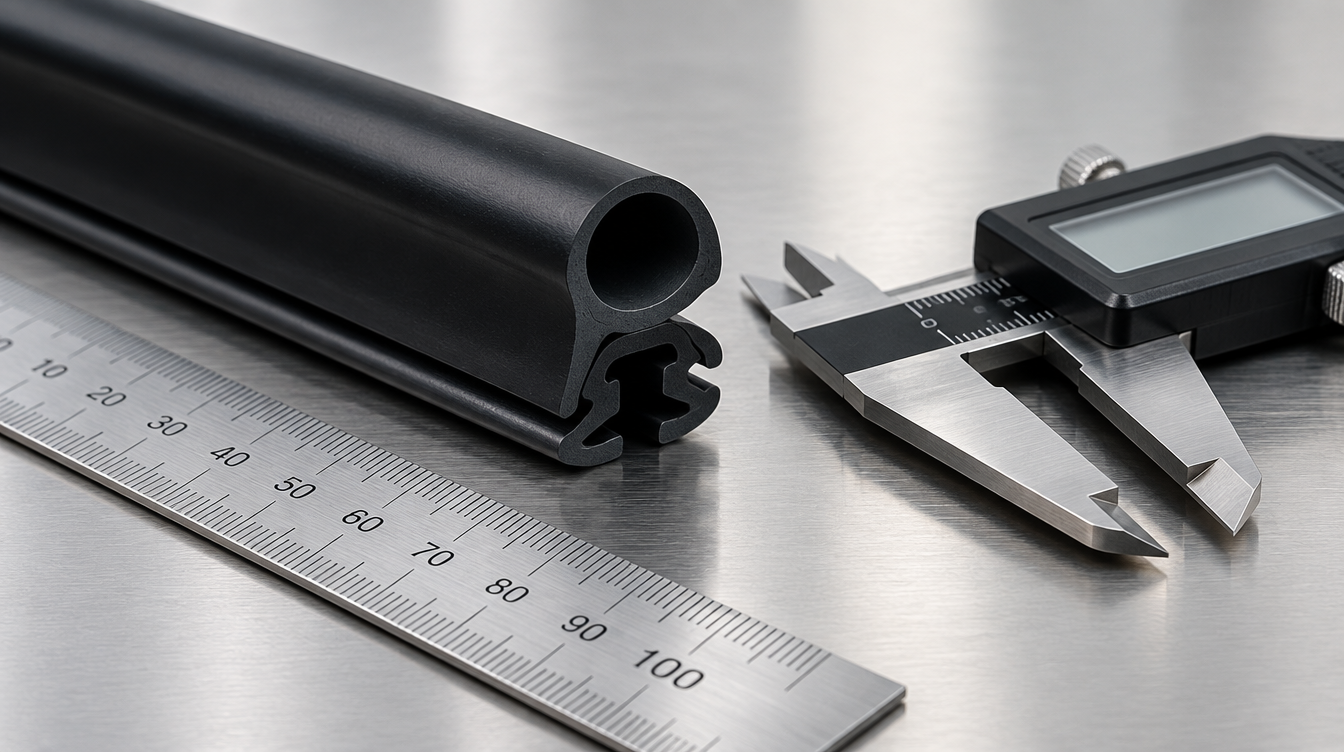
The most common sizing error is designing to the nominal drawing gap and ignoring the real as-built variation around the door perimeter, which produces a seal that works perfectly in the corner of the aperture where the gap happens to match the drawing, and leaks or fails to fully retract at the point where the real gap is largest or smallest. Measuring the actual as-built gap at multiple points, not trusting the drawing alone, is the single highest-value step in the entire sizing process, and it is also the cheapest step to get right, since it costs nothing but time with a set of callipers or feeler gauges on real, assembled doors.
Manufacturing, Testing and Compliance
Because deflated diameter, inflated diameter and groove geometry all have to work together as a matched system, inflatable seal projects usually involve closer dimensional coordination between the seal supplier and the vehicle or equipment OEM than a standard static profile project does. The retaining groove or channel, whether produced as a rubber extrusion component, a dovetail-style mechanical retention profile, or machined into the door frame itself, needs its own tolerance controlled against the same gap data used to size the tube, not specified independently. Custom tooling lead time is a practical constraint worth planning for early: a bespoke tube cross-section or groove profile matched to a specific door frame geometry takes longer to develop than a catalogue tube diameter, and the gap measurement exercise described above should ideally happen before tooling is committed, not after.
Sizing decisions are only as reliable as the test data behind them. Fatigue and cycle-life testing of the confirmed tube construction, at the pressure and stroke actually specified, is what converts a calculated sizing decision into a validated one. Standard elastomer test methods for tensile strength, elongation and compression set are published by ASTM International and ISO, and any inflatable seal fitted inside a rail vehicle passenger envelope must additionally meet the fire, smoke and toxicity requirements of EN 45545, maintained under the CEN-CENELEC framework, for its hazard level and vehicle operating category. Vehicle-level interoperability requirements that inflatable door seals feed into are coordinated internationally through bodies such as the International Union of Railways (UIC), and where pneumatic control components and pressure-retaining hardware are part of the sizing and control system, design and test practice commonly references frameworks maintained by bodies such as ASME. A supplier's traceability system should retain the gap measurement data, construction records and cycle test results tied to each project, since fleet-wide sizing questions can resurface years after initial delivery.
We are not listing a specific named engineer contact or sizing worksheet template here, since intake for sizing support runs through our standard RFQ process rather than a named individual, and we would rather route your project to the right engineer directly than post a contact detail that may go out of date. Send us your door or aperture drawings, and real measured gap data where possible, and our team will pick it up from there.
Key Takeaways
Sizing an inflatable seal correctly is a tolerance problem first and a materials problem second: the real, as-built gap around a representative sample of doors, not the drawing dimension, is the input everything else is built from. Stroke should be set to cover the maximum observed gap with margin while keeping the deflated tube safely clear of the door's travel path, and inflation pressure should be set last, at the lowest value that reliably achieves full sealing contact on the confirmed tube construction, then validated against real fatigue and cycle-life test data before it is finalised.
Send us your door or aperture drawings and real measured gap data, and our engineering team will size, construct and validate an inflatable seal matched to your exact application.
Need a custom sealing solution?
Talk to our engineers about inflatable seals, rubber diaphragms and custom extrusions built to your exact spec. We respond within one business day.
Frequently asked questions
What happens if an inflatable seal is undersized for the gap?
It will not reach full sealing contact across the full range of the real gap, causing inconsistent sealing, leaks, draughts or noise at the points where the actual gap exceeds the seal's inflated reach.
Can inflation pressure be increased to compensate for an undersized tube?
No, or only marginally and at the cost of accelerated fatigue on the fabric reinforcement. Increasing pressure beyond the tube's designed range does not meaningfully extend its reach and shortens service life.
Should I size the seal off the drawing tolerance or the actual measured gap?
Always the actual measured gap on representative real doors, since manufacturing and assembly tolerance stack-up commonly produces real gaps that differ from the nominal drawing dimension.

Need a quote?
For custom rubber sealing solutions contact us. We will respond to you within 1 business day


.avif)